Refika Yilmaz, 25-year old captain for Turkey’s women’s national ice hockey team. (Photo provided courtesy of Refika Yilmaz).
I can clearly picture her in my mind’s eye; a young girl, in-line skating in the orange haze of the Turkish sun. Alongside boys, firing balls and pucks from morning to night. Needing to move, needing to be active, and loving to skate. Her country, Turkey, is a most beautiful one; welcoming to foreigners with its delicious food, kindhearted people, and historic atmosphere. I know firsthand, having spent 2-weeks there myself in the Autumn of 2006. But it would hardly seem to be a place where you would come across a young athletic girl who was totally enthused with the game of hockey. In a land of Mediterranean sun and what seems to be eons worth of history, what is routinely called “Canada’s game” would not come to mind. Contrary to that thought though, I meet the inspiring captain of the Turkish national women’s ice hockey team, Refika Yilmaz.
While she is 25-years old now, Yilmaz started playing in-line hockey with boys at the age of 12. Born in the capital city of Ankara, Turkey, she has been highly active from her youth to this very day. “My childhood was full of sports”, she tells me. “I would never stay in one place for a long time without moving. After school, I was always going to play football (soccer), or doing cycling, or in-line skating, or playing in-line hockey. I’m still the same now”. I tell Yilmaz that I am both amazed and proud of her when she informs me that she currently runs 8 to 14-kilometers everyday as part of a normal workout routine, but mostly for her own enjoyment. “I love running, and I want to attend some long distance races. In May, I will be doing a race in Izmir called ‘Wings for Life'”. I do not even know how Yilmaz finds the time, as she is currently preparing to move to Munich, Germany, so that she can complete courses for earnining her Masters degree at Cologne University.
From the start of our interaction though, I still cannot shake the question over how a young girl in Turkey could come across the game of ice hockey. Yilmaz elaborates for me on how it came about. “Actually, I was playing in-line hockey with boys at the time. A player from the ice hockey league saw me, and wanted me to come play ice hockey because I was the only girl who was there playing with the boys. During these years, they were looking at starting a women’s ice hockey league and were trying to gain interest and find players. So I started playing ice hockey”. Playing space would be extremely limited for Yilmaz and her new found sport, and she and her mates really had to make the most out of what was to be had. “In Ankara there were not many opportunities to play ice hockey. There is actually just one Olympic size rink, and all of the hockey teams were having to go there so that they could practice; even as much as two or three teams at the same time. We would divide the rink itself into two or three parts, depending on how many teams there were, and then doing 40 to 45-minute practices as much as two or three times a week. Unfortunately, this rink has since been closed and there are no other rinks of this size in Ankara; just small ones to do smaller practices. Most teams cannot even do practices now in Ankara. I really hope that an ice rink will open up soon and teams will be able to start doing practices again”, Yilmaz pines. Relaying this to me, I am even more amazed that the opportunity for her to play ever came about; certainly not under the easiest of circumstances.
Team captain, Refika Yilmaz, shaking hands with the opposing captain. (Photo provided courtesy of Rafika Yilmaz).
Wanting to get a better understanding of how thoroughly she is acquainted with the game, I ask Yilmaz to tell me about her hockey heroes. We find common ground quite quickly when the answer ends up being the legendary Jaromir Jagr.”I love him as a player because he has such great skill! I am sure that he is going to continue to play like a ‘young player’ until the end. Jagr has a great sense of humor too. When he is on the ice, I can’t stop watching him without smiling”. Even though Yilmaz is now a veteran, even at 25-years of age, she still has stars in her eyes over her hockey hero. “I really hope that I’ll have an opportunity to meet him!”. When considering her own longevity, he inspires her even more so. “I want to play for the national team as long as I can. I think that I will continue to play until the very end, just like Jaromir Jagr”.
For Refika Yilmaz, the magnitude of playing for her country is so much bigger than what it means in her own heart, even as the team’s captain. “Representing my country is the biggest honor of my life. Because I am representing my family, all of my friends, all the people whom I have never met, all of the people that live throughout the country, from border to border. When I step onto the ice wearing the national team jersey, I know that I am note there are ‘Refika’; I am on the ice as Turkey”.
Being team captain provides Refika with additional responsibilities that she does not shy away from. The responsibility to be that additional support her teammates need, and recognizing the struggles that can occur individually. “We are athletes. And in my opinion, athletes are emotional human beings, and many different environmental situations can affect an athlete; sometimes we can’t play as we do every time. When I see that one of us is not in a good mood, I try to talk with her one on one, face to face first. If that doesn’t work, we work to help each other and the sisterhood goes on”.
Refika Yilmaz at the 2016 Women’s Division II-B World Championships in Spain. (Photo provided courtesy of Refika Yilmaz).
There is definitely a mental aspect to every game, and the mindset of Yilmaz and her teammates has to be understood. It is all about your point of view and approach to the games mentally. “Before games, we know that we will just play for 20-minutes multiplied by three times that we give everything for this game. I remind my team about that. We made many sacrifices to come to this level. Sometimes we didn’t go to school, didn’t see our families, didn’t see our friends – there was no social life. Just hockey. But within those three sets of 20-minutes, that is the time that we get our reward for all of those sacrifices”.
Sacrifices such as these are what led Yilmaz and her Turkish teammates to finish in first place for the 2015 Division II-B qualification, thus securing a spot and promotion to the 2016 Women’s World Division II-B Championships which were held in Spain from February 29th through March 6th, 2016. But it was through the qualifier games in Hong Kong in February 2015 that saw Yilmaz’s leadership skills come through while she was at her very best on the ice. Going 3-and-0 in the qualification games, Turkey’s women defeated Bulgaria, South Africa and Hong Kong. In the 3-games, Yilmaz recorded 5-assists and a was a plus-7.
Team Turkey at the 2016 Women’s Division II-B World Championships in Spain. (Photo provided courtesy of Refika Yilmaz).
Unfortunately for Yilmaz and Team Turkey, the tournament this past March in Spain would not go as well. Turkey would lose all five tournament games, suffering a very lopsided goal differential of minus-32; having only registered 8-tournament goals as a team. But the important thing to realize is that Yilmaz and her teammates had made it into newfound territory for Team Turkey – the women’s national team had never made it this far before in international play. They learned from this experience and know what to expect going forward. And like newfound territory, it can be revisited, worked upon and improved upon. Refika Yilmaz knows that she and her teammates gave it their all and that they will continue to do so. “I just tried to do my best for my team and for my country. I am so proud of my team. From beginning to end. And I will be proud of us for my whole life long. The first place in the qualification championship was our first experience with this, and the best thing that we have done to this point. We were believing in each other. We love each other as a person first, then as teammates. Like sisters. Before and after games, we were talking about our mistakes and each game we tried to correct them”.
Yilmaz has some wise words, and has a strong understanding of how to guide a team that is still very much in its infancy in international competition. After all though, she has been doing it for quite sometime. “When I was 16-years old, I heard that the Federation would be choosing its first women’s national hockey team, and that we would have tryouts and elimination for roster spots on the team. You can’t believe how much I was doing at practices to be a good player and to be part of our first national team! Wanting to represent my country and wear my national team jersey. I was doing practices with boys and girls, it didn’t even matter, from 6:00 in the morning until midnight. I was attending any practices that I could find. It was my biggest passion, and I was playing with the same passion that I am with now. I just really wanted it and I got it. At 16, I was the youngest player on the national team”. Laughing, Yilmaz ponders, “Maybe I’m old now?… No, I’m still young”.
Refika Yilmaz controlling the puck, fending off an attacker. (Photo provided courtesy of Refika Yilmaz).
Yilmaz’s enthusiasm for women’s ice hockey in her country is both obvious and contagious. I get caught up in her strong sense of pride for her country and for her teammates, and I really want to see this program foster throughout Turkey. Maybe especially because I have been there before, and caught a glimpse of the national pride that individuals like Refika Yilmaz imbue. I ask her about how the sport can be grown amongst a younger generation of Turkish girls. “There are many projects that could be run to go about this. First, we need ice rinks. I heard that there are to be some ice rinks built in Ankara, or at least around Turkey. I really hope that we see them soon. But for young girls, we don’t necessarily have to have an Olympic-sized rink. If it is too much, we can have many smaller sized rinks for beginners, or near elementary schools, or schools that wish to bring students to the rink to learn fundamental skating skills. Secondly, the Turkish Ice Hockey Federation can arrange meetings between the public and ice hockey players. Each player of a team can go to a university or a school, and can give a presentation about ice hockey. After some theoretical and practical knowledge, I think many people will have an interest in ice hockey, because ice hockey is one of the most impressive sports in the world”.
I believe that Yilmaz is definitely onto something here. The sport can be grown by spreading knowledge and information. I would be willing to bet that most Turkish people know very little about ice hockey, and likely have never seen it played. But if you can assign a spokesperson, ideally Refika Yilmaz herself, who is knowledgeable and passionate about the sport, but is also very articulate and engaging, possessing a strong belief in the building blocks for growing the sport she loves, I think that the way her plan is envisioned, it is already bound to work. Seeing how much pride Refika and her teammates have in their hockey team and in their country, I WANT this program to grow. For them. And for hockey.
Refika, keep doing your thing! Keep growing ice hockey in Turkey. It’ll work. For many years to come.
Clara Hernandez moves the puck for Team Spain during a 3-2 win against Iceland at the 2016 Women’s Division II-B World Championships (Photo courtesy of Clara Hernandez).
I did a Google search for popular sports in Spain. The most popular sport, by far and wide, is soccer; that goes without question. Listed next in line after soccer are basketball, tennis, cycling, handball, motorcycling, Formula One racing, water sports, rhythmic gymnastics, golf and skiing. I would surmise that when most foreigners think of Spain, they envision the top sports as being soccer and perhaps stereotypically (if not a bit politically incorrect) bullfighting. It is not until after scanning over all of these sports that I even find a sniff of hockey, and even then it specifically lists “roller hockey” – not “ice hockey”. And although I love roller hockey and have played in roller hockey leagues myself, I begin to contemplate the question in my head – “does ice hockey exist anywhere in Spain?”. Low and behold, I end up meeting a young lady for Spain’s national women’s ice hockey team, Clara Hernandez.
“Yes, I’d say that roller hockey is way more popular here”, Clara tells me. “There are many more teams for roller hockey than ice hockey, and I think women’s roller hockey has a lot more history here too than what ice hockey does. But in Spain ice hockey is starting to grow pretty fast”. Though the 21-year old Hernandez did not initially find her hockey roots on the ice, roller hockey seems to be far more readily available to interested athletes, even in schools. ” I started playing in my school when I was nine years old. I was born in a small city called Avila but when I turned nine we moved to a bigger city called Valladolid. When you talk about roller hockey in Spain I would say that Valladolid provides a lot of opportunities to play. I am obviously very thankful that we moved there”.
Trying to beat boredom in a new school, Hernandez’s mother encouraged her daughter’s interest to get involved in playing organized sports, thus bringing about the first opportunity to play hockey. “I actually remember this moment very well” Hernandez says. “I was with my mom at the school. Just kind of bored; trying to choose some sport or other activity that I could do during the school year. But then I turned my head and suddenly saw some guys playing roller hockey, and I immediately said ‘Mom, I want to do that‘ “, she recalls quite fondly. It is interesting to see how the real hockey enthusiasts and the lovers of the game can recall so vividly those first moments of getting acquainted with their sport. The memories stand out so vividly in the mind’s eye, no matter if you are from Canada, USA, Russia, or even Spain. The raw beginnings of the love affair with hockey never seem to fall from memory.
“The Wolfpack”, Team Spain – Clara Hernandez and her teammates at the 2016 IIHF Division II-B Women’s World Championships (Photo provided courtesy of Clara Hernandez).
Clara began to be fostered in the game of hockey, and developed an appreciation and understanding of what it takes to be a competitor; whether it is on a roller rink or on ice. Not necessarily versed in the global game of hockey at the time, a coach and a teammate come to mind when she considers her early hockey heroes. “I look up to my first roller hockey coach in school Andrés Portero ,and then also my teammate, Leticia Abrisqueta, because of their hard work, and because of their sense of taking care of every detail and taking care of the rest of the team”. Abrisqueta also plays alongside Clara currently on the national women’s ice hockey team.
After becoming proficient at her new found sport of roller hockey, within a few short years the opportunity to play on the ice and at the international level would begin to present itself for Clara. “Spain’s women’s ice hockey team is extremely young and really has not been around for very long”, she says. “I was only fourteen years old when they decided to start a women’s national team, and we first ended up doing a tournament in France before joining Worlds competition”. Considering that Hernandez is only 21 and the national ice hockey team began when she was 14, the sport truly is in its infancy for Spain. This makes it not only very exciting for the athletes, but also explains why there is such little information available about it. Still, for Clara Hernandez it is truly meaningful to be such a pioneer in the sport that she loves. “I was lucky enough to see the team born and to be part of it”. Grassroots hockey, so to speak.
Clara Hernandez plays center currently for the ice hockey club Kazkabarra Negu-Kiroletako Cluba. “I am living in Barcelona. And though there are not a lot of ice rinks in Spain, I decided to join this team, which was great”. This team is located in San Sebastian, Basque Country – a region in Spain in the western Pyrenees, spanning the border between France and Spain, and the Atlantic coast. This year’s club league is comprised of seven total teams, though Hernandez tells me that the number is steadily growing.
Where Clara Hernandez really was able to shine and demonstrate her puck-skills was at the 2016 IIHF Division II-B Women’s World Championship which was held from February 29th through March 6th, with none other than Spain as the host nation for the tournament. Six different nations comprised the teams competing, including Spain, Turkey, Australia, Iceland, New Zealand and Mexico. Hernandez and Team Spain were simply superb right from the start, pulling off an 11-1 shellacking of New Zealand on the Leap Year February 29th game. Clara recorded an assist, 2-shots on goal, and a plus-1 during the dominating victory.
Clara Hernandez, prepared to receive her silver medal at this year’s Division II-B Women’s Worlds. (Photo provided courtesy of Clara Hernandez).
Throughout the rest of the way Spain would only lose one tournament game, and that at the hands of a 4-1 loss to Australia. Otherwise, Hernandez and her teammates pulled off wins with a 3-0 shutout over Mexico, a 3-2 victory over Iceland, and an 8-1 win over Turkey to secure the silver medal for their country. Hernandez would finish the tournament with 5-assists in 5-games, including a 3-assist production in the final game against Turkey; doing her part to ensure the victory and the second place medal. “We are very, very happy about our performance, but we have been chasing the gold since our first appearance at Worlds when we also got silver. But to me, it was just the best feeling, and always the best days in the year”.
The tournament was a huge success for not only Hernandez, but for Team Spain in general. Spain’s goaltender, Alba Gonzalo, was absolutely phenomenal between the pipes; in 5-games Gonzalo would post an astounding 95.28 save-percentage after turning aside 105 shots and only allowing 5-goals. Gonzalo would be named the tournament’s Best Goaltender, while one of Spain’s top defenders, Vanesa Abrisqueta, would be named Best Defenseman. Meanwhile Clara’s memories from the tournament seem to resonate hunger more than anything else; a hunger to get better as a team, and to begin competing at a higher level. Silver is great, but Hernandez wants better. “The best memories from the tournament are really from before the games when we are getting ready as a ‘wolfpack’ and just listening to our coaches’ words. A silver medal means a lot, but at the same time it only make us think about gold”.
Spain’s national women’s team has high expectations for it program. “In 3-years, we will be in the first division they say”, Clara tells me. And while they are currently demonstrating their impressive prowess at this level, moving up another division is not out of the question; especially considering this most recent silver medal run, and the fact that they have youngsters like Hernandez, who is already a veteran at 21, and the soon-to-be 19-year old phenom goaltender, Gonzalo. Hernandez tells me with self-assurance, “I will keep working so I can continue to be part of the national team and help us to go up to other divisions. I would like to get the gold. I want to improve and learn as a player, and play more tournaments just as every sportswoman would want. And to make it to the Olympics”.
Clara and some of her “Kazkabarra Negu-Kiroletako Cluba” teammates, after they had received their silver medals and trophy. (Photo provided courtesy of Clara Hernandez).
Hockey enthusiasts, especially of the women’s game, may indeed not have long to wait before they see Spain in the limelight. While their team is growing out of humble beginnings, they possess strong ideals for cornerstones. You read Clara mentioning a “wolfpack” mentality amongst her teammates. Teammates. Team. Clara speaks it herself. “Being aware that I am part of a group. So the group/team always comes first. And most of all, I need to be thankful about all the moments that I have had the chance to live, and all the support that I have received from my family and friends along the way”. The foundation is indeed there. Now it is time for Clara and Team Spain to move onto bigger and better things as a hockey club. In Spanish “La mejor defensa es el ataque” means that “Attack is the best form of defense”. Spain is in attack-mode right now! Knowing that the team, the “wolfpack”, comes first and foremost, be prepared to see what Clara Hernandez and Team Spain can do. Odds are they will turn more than a few heads in hockey realms across the globe.
16-year old ball of fire for Team Denmark, Debbie Andersen taking the face-off draw. (Photo courtesy of Debbie Andersen)
These days, the game of hockey stretches to all corners of the earth, and particularly throughout the European Union. While its Scandinavian brethren Sweden and Finland have long been hockey hotbeds, the game has also been embedding its roots into the country of Denmark. This current 2015-16 NHL season has seen seven Danish players crack NHL lineups, including regulars like Anaheim goaltender Frederik Andersen, Colorado’s Mikkel Boedker, the Islanders’ Frans Nielsen and Montreal’s Lars Eller. Possessing a strong interest in the women’s game, it makes me wonder as to whether women’s hockey has much of a presence in Denmark as well. I end up meeting a 16-year old ball of fire for Denmark’s national U-18 team, forward Debbie Andersen.
“My favorite hockey player is Sidney Crosby”, Debbie tells me. I am sure that even the NHL would be impressed to know that an aspiring 16-year old female hockey player in Denmark calls the face of their game her favorite NHL player. “My favorite team is the New York Rangers”, she says; even better. But Debbie has her own personal heroes too that fall a bit closer to home. “There is also a player on my team who never gives up, and I really look up to him; I want to be better than him someday; his name is Joah (Aalling)”. Debbie and Joah play for Denmark’s Aarhus IK hockey club. Speaking more about Joah, it is obvious that Debbie knows that in order to succeed in hockey and to remain at a successful level, she needs to work on her game constantly. “He is a player who wants hockey more than anyone else that I’ve ever met. He makes me want to fight even harder, and that is what makes a ‘favorite’ player in my eyes”, she expounds. “He trains six times a week and shoots pucks daily, and I’ve started to do that also. I get inspiration from him that I have not really gotten from anyone else other than my coaches”.
Located on the east coast of the Jutland peninsula, Debbie lives in the city of Aarhus, Denmark, which is also where her hockey club is from. The second largest city in Denmark, Aarhus’ own hockey club is not far from where she lives at all. “There are not many hockey clubs in Denmark, and most are pretty far away from where I live, but in Aarhus it only takes me five minutes to get to training. But if I play or train in another place, it usually takes me one or two hours to get there by car”.
Debbie began playing hockey at eleven years old, and has played as a forward right from the get-go. “Forward is my favorite position, because I’m a fighter *she laughs*, and I want to be the one who makes the goals and assists; I’ve always wanted to play forward for that particular reason”. I suppose that in a family where she is the only girl with three brothers, two of whom are hockey players as well, Debbie would indeed be a bit of a scrapper both on the ice and at home. Though Debbie does credit one of her brothers for starting her interest in playing. “My brother saw a hockey movie at school, came home and said, ‘Mom, I want to play hockey too; it looks like fun!’. I went with my brother and my mom down to the hockey hall to register him and me too, and since then I’ve never left the ice!”.
Debbie Andersen being mobbed by her teammates after a Denmark goal. (Photo courtesy of Debbie Andersen).
Her fighting spirit is what Debbie believes is the most important part of her game, and something that she would extend to other players wishing to learn the game as well. “I think that the most important thing for a hockey player is fighting!”, though she does not mean fisticuffs or brawling; more so, approaching the game with tenacity and ferociousness. “Fight for every puck. Fight against every opposing player. And never give up on that. Be there for your teammates and support them, just like you would want to be supported”. I love this spirit that Andersen embodies. She is that type of player that fits the old adage; you love having her on your team, but would hate playing against her. Andersen is a disturber to the opposition, battling in corners and creating scoring chances both for herself and for her teammates.
This “junkyard dog” style of play and her “never give up”-attitude are what garnered Debbie’s nomination for the Danish U-18 national team that competed in January 2016 at the IIHF Women’s World U-18 Division-I Championships that were held in Miskolc, Hungary. Denmark had actually earned entrance into the tournament by finishing first in the 2015 Division-I Qualification which took place in Poland. For Debbie Andersen, being selected to play for her country was the most meaningful experience of her young life thus far, though it took her strong sense of diligence and commitment to attain it. “All girls who were playing hockey in Jutland were invited to a training camp run by the national team coaches. After several trials with the team, they decided to bring me along for a tryout with the entire national team. They have not kept me off the team since, and I have just continued to fight and work hard to keep my spot on the roster”. There is that fighting spirit again from her. I like the fact that Debbie humbly acknowledges that there are no guarantees, and that if she wants to continue to represent her country and play the game she loves, that she cannot slow her pace; she has to continue being committed.
Debbie standing tall on the Team Denmark bench during the 2016 Division-I U-18 Women’s World Championships in Hungary (Photo courtesy of Debbie Andersen).
But for at least 2016’s version of Denmark’s U-18 team, the hard work was all worth it and something that she will be able to revel in forever. “My favorite memory was when the team and I put our equipment on for the first time and our jerseys. You are just so happy to know that you are one of just a handful of girls who is going to fight for your country. After that, the next biggest memory was the first goal we scored as a team in the tournament”. Denmark’s first goal would come in their third game of the tournament, scored by Andersen’s teammate Michelle Almquist, during a 3-1 loss to Germany. “They were both memories that I will never forget”, Andersen tells me. “It was just so big for me, that even now I will sometimes feel a tear running out of my eye. I was just so proud!”. And while Denmark would not muster a win during their five games in the tournament, being able to represent her country is something that will forever belong to Debbie as she continues throughout her hockey career.
And Debbie already has goals for the years ahead. “I really want to play college hockey. I really just want to get to the highest level that a girl can. And then after that, I really want to coach a team of my own someday”. I love knowing that she has these goals, and we then discuss what it will take to get more girls in Denmark interested in hockey; how do we grow the sport from here. To me it seems that Debbie has thought the process out, and has a strong sense of what it will take to promote hockey interest among young Danish girls. “There really aren’t that many girls in Denmark who are interested in hockey”, she says, a little disappointed. “But I think that if girls started to play some hockey in school, and then at home too with their friends, they’ll see that it’s a lot of fun and they’ll want to play too. Make them feel the fun of playing hockey – just like I did”. And she is right. Give them the opportunity to see how much fun this sport is. I recall being a seven year old in Buffalo, whacking a ball around with my hockey stick in our frozen backyard… there is just nothing else like it, and a youngster can easily fall in love with the game.
The diminutive fireplug for Aarhus IK , Debbie Andersen, fighting for puck possession against a much larger opponent. (Photo courtesy of Debbie Andersen)
There is no slowing Debbie Andersen down. This young lady is a Tasmanian devil of sorts, at least on the ice and with her dreams for growing women’s hockey in her home country. “I really hope that girls’ hockey can become much more popular”, she almost pleads to me. “Girls’ hockey is just as important as men’s hockey. Yes, we are girls, but we want to play just as much as the men do… at least me!”. I like this kid; she has got superb leadership qualities and some bite to her. I think that if you put Debbie Andersen at the helm of women’s hockey in Denmark, made her a spokesperson of sorts, that she could definitely rally young girls and get them interested in the game. She leads by example, and as this young lady gets a little older and begins playing for the national women’s team, she may very well have inspired a large grouping of young girls to fall in love with the game as well. Go Debbie!
Olivia Knowles #27, defender for Team Canada, is a remarkable person and hockey player. (Photo Credit: Jana Chytilova / HHOF-IIHF Images)
Olivia Knowles is wise beyond her years. Hailing from Campbell River, British Columbia, the seventeen year old defender for Team Canada’s U18 Women’s Hockey team has a good head on her shoulders, and has a strong sense of self-awareness; particularly when it comes to what she wants to achieve in her hockey career, what steps she needs to take to accomplish those goals, and where she stands right now. It is inspiring and thought-provoking to listen to her speak, and equally as captivating when watching her compete on the ice.
I was fortunate enough to see Knowles play regularly in January at the IIHF U-18 Women’s World Championships in St. Catharines, having made the drive up from Buffalo. It was well worth it, as the tournament was a great deal of excitement, and presented my first opportunity to see Olivia Knowles play in person. She was a stalwart defender for Team Canada during that entire tournament, and her strength and tenacity on the back end were instrumental in Canada’s run to the gold medal game against Team USA; unfortunately, a 3-2 overtime heart-breaker for Knowles and her teammates. And while I know that she wishes that the outcome had been different, the tournament was a tremendous success for Olivia in more ways than one. Knowles finished the tournament with 2-assists for 2-points in 5-games, while putting up a plus-3 for her plus/minus to go along with 4-shots on goal, two of which came in the gold medal game against USA.
Thinking back on the tournament, Knowles tells me, “There is no bigger honor than to be a Canadian, playing the sport that every Canadian loves. It’s bigger than yourself. I think back on that whole week, and sometimes I think I talk about it too much *laughs*. It is hard to actually try and relive the experience, but the memories from the tournament always come back. The little things, the little memories are the best”.
Olivia Knowles began playing organized hockey when she was about 8-years old. At the time, her older brother was already playing hockey, as well as two of her cousins (who are now both playing in the British Columbia Hockey League, BCHL), and with being at the rink with so much regularity it was perhaps only natural that Olivia would end up playing the game too. “The first time I had played was actually with the “ESSO Fun Day” program, which is a great event. I had done gymnastics for a long time, so I have always been very competitive and very athletic. At the time, there were not a lot of opportunities to play with girls teams in Campbell River, so I played with boys instead, and even then would have to often travel to Victoria or Vancouver to play. But you are starting to see a lot more opportunities now in the area for young players than what there were before”. Olivia’s grandfather played for the old Trail Smoke Eaters of the former Western International Hockey League. “Playing hockey runs in the family, but it seems to skip a generation”, she laughs.
Knowles in the thick of intense action versus Team USA at the 2016 U-18 Women’s World Championships in St. Catharines. (Photo Credit: Jana Chytilova / HHOF-IIHF Images)
Olivia has been enrolled at the Okanagan Hockey Academy in Penticton, British Columbia, and she has certainly found her place there. “It felt like home as soon as I got there. And I love the city of Penticton. I love the program here, and it works really well with the hours spent at the gym and training”. Okanagan possesses an incredible coaching staff and management team that includes former NHL players like Dixon Ward, Robert Dirk, Blake Wesley, and Stu Barnes, but it is former Wayne State University head coach and assistant at St. Cloud State, Jim Fetter, who has been most paramount throughout Olivia’s time at OHA. Fetter serves as the head coach for the women’s prep program at Okanagan. “He is such a great coach, and he really helped with my university decision making. He was a coach at Wayne State and St. Cloud, so he is very knowledgeable. He teaches us what to expect in college, and that we have to work hard through everyday. He taught me a lot about how to handle days away from the rink too, how to prioritize and time management”.
Looking at Knowles’ numbers from the 2014-15 season with Okanagan they are indeed very solid from her work on the blueline. In 28-games she recorded 4-goals and 6-assists, including one power-play tally, and also scored a hat-trick in a 6-1 victory over the Colorado Selects. Olivia laughs recalling the 3-goal game, “It was really weird. That was the first hat-trick of my life. It was one of my very first games with OHA, and I am thinking to myself, ‘I don’t know what I’m doing out here, this is my first time playing with girls, I’ve never played with girls before’, and then I end up scoring a hat-trick. It was really fluky”.
Olivia considers her hockey hero to be her former defense partner and captain at Okanagan, Micah Hart. “She was my D-partner last year and she is a born leader. Someone that you respect instantly. I find myself in situations where I am asking myself, ‘what would Micah do here?’ or ‘how would Micah handle this?’. I think that leadership is so important, and I try to imbue those same skills that Micah does.”. Hart is currently playing for Cornell University and had a stellar freshman year, being named to the ECAC Hockey All-Rookie Team and named as an All-Ivy Honorable Mention. Hart also spent two years on the Team Canada U-18 squad, and captained the team that took silver in Buffalo in 2015. It is easy to see why Knowles looks upon her with such tremendous respect and admiration.
Having been born in January of 1999, Knowles is eligible to compete once more for Canada at the 2017 Women’s U-18 tournament. With what she has learned from working alongside Hart and the tutelage of Coach Fetter, combined with her own experiences from this past year’s tournament, I am certain that Canada will call upon her to be one of the key contributors and role models for the 2017 club. At least for this next go-round, Knowles will know what to expect too. Speaking of the selection process for the 2016 team, she recalls it quite vividly. “It is a pretty long process. I remember meeting with Coach Fetter, who had been the coach for the 2004 U-18 women’s team, and I was told that I was definitely ‘on the radar’ for Team Canada, but needed to look at my game a bit more because it was not quite there yet. I was brought in to do fitness testing at a 10-day conditioning camp in Calgary with 12 D-men who were being considered for making the team. I have always thought that I’ve had really good conditioning because of all of my years doing gymnastics, so I thought I would be okay. But there is no questioning, that was the most tired I have ever been. It was so hard both mentally and physically, but it is amazing how much you are able to learn in such a short period of time. We went onto play three exhibition games at Lake Placid. We ended up winning the first, losing the second, and winning the third”.
Knowles #4 helping to defend her net during an exhibition game versus USA in Lake Placid in September 2015 (Photo Credit: Nancie Battaglia Photography)
After the games in Lake Placid though, Olivia had to wait full four months, nervous all the while, before she would learn whether or not she made the team. “The goalie for Team USA, Alex Gulstene, also attends Okanagan, and she had already been notified that she was selected. I remember getting the call from Team Canada, and in some ways, it is the most terrifying thing ever”, she laughs. “So I am on the phone with Team Canada, standing outside at the academy, and I was so nervous. Alex walks out and realizes what is happening. She starts jumping up and down, freaking out, wanting to congratulate me while they are telling me that I made the team, and here I am trying to keep my cool and be professional on the phone”.
In addition to her experience from this past tournament, a selection of Knowles to the 2017 squad seems a no-brainer, particularly when considering the intangibles and fundamentals that she possesses. “I am blessed to be big”, she says, standing at 5’9″ and at the 150-pound mark. “I have size and strength. You can’t really learn size, and I do feel that it gives you an upper hand. I also feel that I am very body aware from all the years that I did gymnastics”. Olivia and I speak at length about how important it is be a coachable athlete, something we both found makes a true difference in how you perform and how you learn. “By being coachable, you know how to react to criticism, and how to learn from it”, she says. “I have always had a strong work ethic, and I have never been afraid of hard work. Plus, it helps that I am extremely competitive”.
There is so much more in store for Olivia Knowles’ future, in addition to playing for her country, and it is exciting to hear her talk about her decision to commit to playing at the University of Minnesota, becoming a Golden Gopher. “It was the first university that I had ever been to when I was about 9-years old. I remember thinking to myself at the time, ‘when I grow up, I am going to play hockey here’. I have been to other schools, and they all have their perks. But in the end, it would come back to my dream of playing there, and what would work best for me; how well I’d fit there. It’s a gut feeling, telling me this is right”. And while she does consider the possibility of playing professionally, Olivia knows that it is one step at a time, and that it really comes down to her own development. “I want to go as far as I can playing hockey. My goal is to play for the senior team (National Women’s Team)”.
Olivia Knowles peppering a shot on net against USA during the 2016 IIHF U-18 Women’s World Championships in St. Catharines. (Photo Credit: Jana Chytilova / HHOF-IIHF Images)
Seeing what she is accomplishing and attaining in her life, I cannot help but be warmed by an interesting story she tells me. “I was just discussing this with my billet sister the other day. When I was in 8th-grade, our English teacher gave us an assignment to write down where we want to be in five years. Well, I wrote down that, one, I wanted to attend the Okanagan Hockey Academy, two, I wanted to commit to playing at a university or college, and three, that I wanted to play for Team Canada”. It is reassuring and inspiring that Olivia has accomplished these goals so exactly, and some of them are still blossoming. She certainly possesses a sense of self-awareness, and her strong foundation in hard work and determination is paying off in tenfold. The general consensus between Olivia, her billet sister, and myself is that she should indeed frame this assignment from 8th-grade and hang it up.
“Have purpose”, Olivia tells me. “That is my favorite quote – ‘Have Purpose'”. Very profound indeed. She elaborates even further, “You need to do things with a purpose, and you need to do them to the best of your ability. Having purpose. Working hard. Saying things to yourself, like ‘I am going to work on my wrist-shot today’, and then actually going and doing it. You need to care about the little things. The other motto I follow is, ‘Do what you can control’. I can’t control things like, the other team, or the fans. But, I can control my attitude. I can control my work ethic. You should never be satisfied. Yes, it is good to celebrate the small victories along the way, but don’t be satisfied with them. There are many fish in the sea, and if you don’t work hard someone else could easily displace you. Keep your nose to the grindstone. But definitely, have purpose”. Listening to her talk, if I was Olivia Knowles’ teammate, I would be readied to go to war for her on the ice.
Let me repeat myself – Olivia Knowles is wise beyond her years, in case you have not garnered that already. She is a superb hockey player and Canadian. There will be many great things that she is going to accomplish in the years ahead, and we have only just scratched the surface of her potential. You cannot help but be excited for her and to get caught up in her sense of duty and character, and her enthusiasm for the future. Olivia Knowles has purpose.
One of the most accomplished players for Team Sweden, #16 Pernilla Winberg helps lead her team into the 2016 Women’s World Championships in Kamloops
With the 2016 IIHF Women’s World Hockey Championships currently underway in Kamloops, British Columbia, Canada, I find it interesting to look at each team participating in the tournament, and to see where their strengths may lie. From there, I like to delve into (what I feel) are interesting aspects of individual players and what they bring to the table for their respective teams. This led me to look more closely at Team Sweden and a standout winger with a lot of firepower on their roster, Pernilla Winberg.
Including this current 2016 tournament, Pernilla has competed for Sweden at TEN different Women’s World Hockey Championship tournaments, beginning in 2004 at just 15-years of age. “The national team coach watched me play with a boys’ team when I was 13-years old, and after that I got invited to one practice during a summer camp that they (the national team) had”, Pernilla tells me. “After that practice, he called me up again and said that I should come back. And ever since then I have played for Team Sweden!”. With arguably her finest performance coming at he 2007 Championships in Winnipeg, Manitoba, when she netted 5-goals and 3-assists in 5-games, assuring a bronze medal at the tournament, Sweden will be looking for the veteran Winberg to contribute a similar level of production in Kamloops. In 40 World Championship games, Winberg has scored 10-goals and 18-assists for 28-points, including her 8-point production in 2007, as well as 7-point run (1-goal, 6-assists in 5-games in 2009).
For Pernilla’s tenth tournament, this time in Kamloops, she has nothing but the very best sentiments about playing in Canada. “It’s always a blast playing in Canada, and the tournaments always bring a lot of people to them. They are very professional”.
Competing in hockey has been in Pernilla’s life for a very long time. Starting at the age of 7 she would play organized hockey for the first time on a boys’ team, as there was little opportunity for Pernilla to play alongside girls in her hometown of Malmö, the third largest city in Sweden. “I always played with boys while I was growing up because we didn’t have much women’s and girls’ hockey down south. As I got older, I continued to play with boys’ teams, but also played some important games with a women’s team in Stockholm (AIK IF, or Allmänna Idrottsklubben Ishockeyförening). Perhaps it is no surprise that when I ask Pernilla who her favorite hockey player was growing up, she easily tells me “Peter Forsberg”; arguably the greatest Swedish hockey player of all-time, and one of the game’s true greats, period.
Pernilla, with her parents, playing with her Swedish team, Linköpings HC.
In international competition, what Pernilla Winberg is perhaps best known for is a startling upset of the Americans during the 2006 Torino Olympic games. At just 16-years of age at the time, Pernilla was the youngest player for Sweden. A seemingly storybook ending – a David versus Goliath of sorts – that the youngest Swede would be the one to knock aside USA in the semi-finals, as it would be Pernilla herself that scored the game-winning goal in a shootout victory. With Team Sweden defeating the Americans by a final score of 3-2, the game is one of the most significant in women’s hockey history, as it marked the first time in international play that USA lost in competition to another team besides Canada. Pernilla recalls, “I was 16-years old, and that was the best experience of my life! It was like a dream come true to play in an Olympic final. Nobody thought it was possible, and to score the winning shootout goal was just the best thing that had ever happened to me in my hockey career”. Team Sweden would go onto to face Canada in the gold medal game three days later, and though they would lose the final game 4-to-1, Pernilla and her teammates had pulled off the unthinkable and became silver medalists.
Winberg’s success at the Olympic games has continued well after the silver medal at Torino. A 5-goal performance in only 5-games in 2010 in Vancouver saw her cap-off a 4-goal output in one game against Slovakia, and a fifth goal against USA. In 2014 at the Sochi Olympics Winberg averaged better than a point per game, capitalizing on 3-goals to go with 4-assists in 6-games. The regularity of her scoring seems to always be there for Sweden, and her Olympic statistics total thus far at 9-goals and 7-assists in 16-games. It is amazing to think that she has been an integral part of Sweden’s Olympic program for such a long period time and since she was so young when it all started. I would have to imagine that there is at least one more Olympic run in her – at least.
At just 16-years of age, Pernilla Winberg became an Olympic silver medalist at the 2006 Torino Games.
Separate from international play, and in order to further her career as a hockey player, Pernilla opted to enroll at the University Minnesota-Duluth, beginning with the 2008-09 season. She was an immediate success for their hockey program. “I wanted to develop as a hockey player and as a person. And since Duluth was the best team in the country the year before I started school there, I saw it as a great opportunity to go there and get better”. In her freshman year at Duluth, Pernilla exploded right off the bat by scoring 14-goals and 27-assists for 41-points in 38-games. The Bulldogs would make it to the “Frozen Four”, the National Collegiate Women’s Ice Hockey Tournament, as semi-finalists, but would lose to Wisconsin 5-1. But there was no question that Winberg’s performance and numbers sparked a run that went far into the tournament for the Bulldogs, and that would enable them to play for the national championship that year in Boston, Massachusetts.
Across her four years playing NCAA hockey, Pernilla appeared in 139-games for the Bulldogs and maintained pretty close to her Olympic average of a point per game; she would end up scoring 45-goals and 66-assists for 111-points, all while playing for one of the best women’s collegiate programs throughout the world. Speaking of her decision to play at Minnesota-Duluth and how it correlated to her success in their hockey program, Winberg says, “I had a few teammates (from Sweden) that had already played or were playing there at the time, and because of that it was natural for me to go there and be comfortable when I already knew a lot of the people”.
Sweden relies on Pernilla Winberg’s firepower and experience.
Currently playing for Linköpings HC in Sweden, Pernilla attends the 2016 Kamloops Championships with a tremendous amount of achievements associated with her name and hockey teams that she has been a part of. And while she is still only 27-years of age, she will be a steadying veteran presence for Sweden at the tournament, having been through this same grind and in the international spotlight many times before. In many ways, this tournament will be nothing new for Pernilla Winberg, and in many ways, Sweden would not want it to be – they would want her winning ways and scoring prowess to continue as it always has. Still, she finds it just as much fun and just as meaningful, being able to compete in the tournament as a member of Team Sweden. “It is always an honor to play for your country, and there is nothing better than to put on that jersey in a championship”.
It is exciting to know what this Swedish sniper can bring to the table for her hockey club, and it will be enjoyable to watch her play regardless. Best of luck to Pernilla Winberg and to Team Sweden!
Maija Hassinen-Sullanmaa backstopped Team Finland to three bronze medals at the IIHF Women’s World Championships throughout her career.
The first time that I ever saw Maija Hassinen-Sullanmaa tending goal was during the 2006 Torino Winter Olympics… and she was simply superb! At just 22-years of age at the time, Hassinen-Sullanmaa and then 16-year old Noora Räty were Team Finland’s exciting young tandem in the nets who backstopped the Finns to a solid fourth-place finish at the Torino Games. I marveled at how well Hassinen-Sullanmaa defended Finland’s net at such a young age, and how she fearlessly faced, even at times stonewalled, powerhouse hockey clubs like Team Canada and Team USA. Facing hall of fame caliber shooters in the likes of Danielle Goyette, Hayley Wickenheiser, and Angela Ruggiero, Hassinen-Sullanmaa held her own in a seemingly insurmountable situation for the Finns. Former US Olympic gold and silver medalist, AJ Mleczko, stated at the time, “Maija Hassinen is a fantastic goalie. She’s young. She’s got a lot of enthusiasm and a lot of youth”. It was that youthful enthusiasm imbued by Maija that caused me to immediately recognize that she was a stellar goaltender.
I first got in contact with Maija in 2008, and have remained in touch with her since that time. Knowing that she recently retired from active play over the summer 2015, I wanted to chat with Maija a bit and reflect upon her remarkable career, both internationally and in her native Finland, and to find out what she is doing these days.
As is the case with most top level hockey players, Hassinen-Sullanmaa began playing organized hockey at a very young age. “I was 6 or 7 when I started playing on a team”, Maija recalls. “I played first with boys as a defender, and after only a few years I started playing as a goalie on a girls team. But always when we were playing just for fun with my friends, I was the goalie. And that’s really where it all started”. To be precise, “where it started” was Maija’s hometown of Hämeenlinna, Finland, which is located in the southern part of her homeland; a town of about 68,000 inhabitants. “Hockey has always been a part of my life”, Maija said. “I used to go watch the local men’s team play in the Finnish national league since I was a little kid. There were quite a lot of opportunities to play on teams always, and we played a lot outside with friends as well”.
I enjoy hearing Maija recall her memories of playing hockey outside as a kid. For isn’t that where hockey always seems to be rooted? No matter if I am considering my own childhood playing on the streets of Buffalo, New York USA, or talking to a Québecois winger hailing from Montreal, or an Ontario-born netminder out of the suburbs of Toronto, or even a stalwart defender from the heart of Russia, or a Finnish born goalie like Hassinen-Sullanmaa, that is the one common thread – hockey as a kid outdoors is magical. And growing up in Finland for Maija it was no different. I like knowing that this common ground exists among those who love the game of hockey, regardless of the countries we are born in.
Hassinen-Sullanmaa would find it a great honor to represent her country at both the Olympics and the World Championships.
Maija had her heroes as well. As a young female goalie who was born in the 1980s, it is likely no surprise that one of those heroes was the first woman to play in the NHL (albeit a preseason game), Canadian goaltender Manon Rhéaume, who also represented her country on the international stage, and had a taste of the NHL with preseason appearances in net for the Tampa Bay Lightning. Rheaume won gold medals for the IIHF Women’s World Championships in 1992 and 1994, as well as an Olympic silver medal in 1998 at the Nagano Games. Maija also idolized another former Canadian goaltender, Andrew Verner, who backstopped her hometown Hämeenlinna HPK in the mid-1990s. Verner being a former draft choice of the Edmonton Oilers, and a standout in the Ontario Hockey League with the Peterborough Petes. Like Verner, Maija would also end up playing for the Hämeenlinna HPK women’s team as she grew up and progressed as a goaltender.
Recalling her stellar performance at the 2006 Torino Olympics, I came to ask Maija how the opportunity to play for the Finnish national team came about. “During the 2004-05 season (at the time she was playing for Finnish team Ilves Tampere), I was called for the first time to attend the camp for national team. And then the next season I was included on the team for the first time in Torino”. But while my recollections of Hassinen-Sullanmaa from the Torino Games are certainly memorable for me, they completely pale in comparison to what it would mean for her to play for her country, and especially what it would mean for her future in her personal life. “Well, it was amazing of course. It’s such an honor to play in the Olympics and represent your country. It was great to be able to play a lot, but a big disappointment to finish fourth. But a big thing for me from the Torino Olympics is that I met my husband there at the games”.
Hassinen-Sullanmaa would play 7-years for her hometown hockey club, Hämeenlinna HPK.
Despite facing powerhouse shooters from both Canada and the United States at Torino, Hassinen-Sullanmaa still put together very respectable numbers for the tournament. In four games, Maija would put up a .875 save-percentage to go along with a 3.38 goals against average and a total of 77-saves at Torino. When looking at these numbers, one needs to consider the attacking strength of both USA and Canada, and the disparity in scoring for teams like Finland when compared to either of those two dominant teams. The fact that Maija’s numbers were as sound as they were after having faced both of those teams is very remarkable. But though her individual performance was very solid, Hassinen-Sullanmaa and Team Finland would fall to the United States 4-0 in the bronze medal game of the tournament, and settle for the fourth place finish.
Though Torino would not turn out as she would have hoped, Maija would eventually find success in playing for her country, including a bronze medal she attained in front of her own hometown. For the games of the IIHF Women’s World Hockey Championships, Maija would backstop Finland to bronze medal victories in 2008 in China, 2009 in Finland and 2011 in Switzerland. “It’s been great to be a part of Team Finland for any event, and of course, especially for the ones where we won a bronze medal. The 2009 championships were a special occasion for me as they were held in Hämeenlinna, my hometown”.
Between the Torino Olympics and four World Championship tournaments, Maija would appear in 9-games for her country, compiling a 0.828 save-percentage within those four tournaments, as well as a 3.12 goals-against average. “I am proud of every time that I’ve had the chance to represent Finland, especially in the Olympics”.
Separate from the international stage, Hassinen-Sullanmaa would play 12-years in the top women’s hockey league in Finland, SM-sarja, of which the final 7-years saw her playing for her hometown club, Hämeenlinna HPK. Perhaps her most memorable season would come during 2010-2011 when Maija backstopped HPK to the national title. Maija was absolutely phenomenal that season, appearing in 15-regular season games and putting up astounding numbers with her 1.44 goals against average and .948 save-percentage that season. Maija’s incredible play continued through the playoffs on HPK‘s championship run, as she would appear in 6 more games with a slightly better 1.42 goals against and a .929 save-percentage.
Hassinen-Sullanmaa celebrating a Hämeenlinna HPK victory.
For those 12-years that she competed in the Finnish national league, Hassinen-Sullanmaa’s career numbers will make you do a double-take. Only once during her career did she put up a regular season save-percentage below a .915-percent, and that came during her very first season. On four different occasions her season ending tallies for save-percentage were above .940. Likewise, in the playoffs only twice did she ever fall below a .900 save-percentage for a season, and again, one of those was during her very first national league season. Those numbers speak volumes as to Maija’s success and longevity playing a high level of hockey for over a decade.
During the summer of 2015, Maija Hassinen-Sullanmaa would officially retire from playing hockey and move into coaching with Hämeenlinna HPK. When I ask her why she opted to retire when she is still relatively young and was still putting up great numbers, Maija tells me that “I felt that it was time for me to stop and let the younger players have a shot… I’ve been working as an assistant coach for the HPK women’s team, and I am mainly responsible for physical training for the players and helping goalies”. It is nice to see how Maija has moved into a different role where she is still very much involved in the game, and able to impart knowledge and experience into a younger generation of players. “For the younger players, I try to tell them that you’ll have to work hard, but to keep enjoying the game and keep playing”.
Lastly, I ask Maija to tell me how she thinks her teammates from throughout her lengthy career would recall her as a player and as a teammate.”I think they remember me as someone who was really focused, hard-working and competitive”. I would have to agree with Maija’s assessment completely, for I see those same qualities when I look at her playing career as well. And while I know that there is always a time to move on and say goodbye, it makes you a little melancholy in knowing that you will not see a player you admired grace the ice with her presence forever. And as the 2016 IIHF Women’s World Championships get ready to get underway in Kamloops in only a few days, it makes me nostalgic. Team Finland will be playing among the top four teams that comprise Group-A; Canada, the United States and Russia. I pause and wonder how Finland would fare, and how would Hassinen-Sullanmaa fare, if she were to suit up for one more championship tournament with the best women in hockey today.
Maija Hassinen-Sullanmaa, now an assistant coach with Hämeenlinna HPK.
But alas, it is not meant to be and she has moved onto other things. I am glad that Maija found great success in hockey, as well as having found her husband. I am glad that she helps train and sculpt young female players today, and I am glad that she is doing so in her hometown where she played for so many years. It is nice knowing that even though she no longer dons the pads, a catching glove, a blocker and a mask, she is still donning a sense of “focus”, “hard-work”, and “competitive” nature. Great job, Maija! And thank you for the all that you have done for the game and for your country.
Steve Brule as a member of the Colorado Avalanche. Here he would play with his boyhood idol, Joe Sakic.
Consistency. If there is one attribute that can be applied to the play and the career of Steve Brule, it would be consistency. Seven times within his 17-year professional hockey career, Brule led his teams in scoring. Twelve times he finished top two on his respective teams. And he did so across the globe; the American Hockey League, the International Hockey League, Germany, Austria and Switzerland. Brule has won a Stanley Cup, and he has won a Calder Cup. He consistently played with top-end talent, and played on forward lines alongside the likes of Patrik Elias, Claude Lemieux, Milan Hejduk, Peter Zezel, and Joe Sakic. It was Steve Brule’s consistency that led him to having a remarkable career in professional hockey, and what makes him a remarkable person and coach to young athletes these days.
While being born and raised in Montreal, Quebec, Canada, the natural assumption would be that a young Brule would have been a Canadiens fan. “I was born in Montreal, but most of my family lived in Quebec City. At the time that I was a kid, there has a big rivalry between the Canadiens and the Quebec Nordiques. I was a huge Nordiques fan, and my idol was Joe Sakic. My dad idolized him too”. Steve and I both give out some fond laughter, recalling those incredible Nordiques teams of the 1980s. Sakic, Michel Goulet, the Stastny brothers, Dale Hunter. It is easy to see why Steve would have loved the Nordiques. If I lived in the province of Quebec, they would have been my favorite of the two as well. “I have loved hockey since I was 5-years old”, Steve tells me. “I started skating when I was 5, and began playing organized hockey at 6-years”. Little would Brule realize that over a decade later he would be skating on the same forward line as “Burnaby Joe” (Sakic), his boyhood idol.
Brule would play his major junior hockey with the St. Jean Lynx of the Quebec Major Junior Hockey league. The season after he ended his major junior career, the Lynx would actually be moved to Rimouski and become the Oceanic; the major junior team of today’s NHL superstar and the face of Canada, Sidney Crosby. But while Brule played in St. Jean, his strong play and productivity demonstrated that he would be a highly touted prospect for the professional level. And with teammates including future NHLers Patrick Traverse, Jose Theodore, Georges Laraque, Eric Houde, and Jason Doig, Steve would not be the only one. “We had really good teams in St. Jean, but we never managed to do well in the playoffs. We would have pretty good regular seasons, but we always lost in the first round”. Throughout the course of our conversation, we touched upon a common plotline in Brule’s career; I mentioned it earlier when speaking of his idol Joe Sakic – there were key moments in Steve’s career that he could not have predicted when he was younger, but that would make sense, almost epiphanies of sorts, as they came to fruition in the years ahead. Thinking about those St. Jean teams and how he and some of his teammates would go onto NHL careers, Steve says, “When you are in the present, you don’t realize what you are a part of. Those 4 or 5 players going onto the NHL. When you think back on it, you see that we really did have some good teams, and you feel fortunate to have played with such talented players”.
Steve Brule would play major junior hockey with the St. Lean Lynx of the Quebec Major Junior Hockey League before the team would relocate to Rimouski and become the Oceanic.
In 136-games in his major junior career, Steve would finish with 74-goals and 111-assists for 185-points. Numbers that would normally be good enough for a player of that caliber to be selected in the earlier rounds of the NHL draft. “All the European players were being drafted into the league at that time. Scouting reports all showed that I was expected to go in the second or third round. As those rounds passed, I was kind of worried and a little disappointed. But as soon as you hear your name being called, you forget all of that. It is just an amazing moment!”. Brule would be selected in the sixth round of the 1993 entry draft by the New Jersey Devils, a team that was about to enter into a decade’s worth dominance and championship runs in the NHL.
Steve Brule would play over 5-years with the AHL’s Albany River Rats, the affiliate of the New Jersey Devils.
The New Jersey Devils would win their first of so far three Stanley Cups during the lockout shortened 1994-95 season. This would also be Steve Brule’s first season of professional hockey, and he would begin his career with immediate success. Steve would be assigned to the Devils’ AHL affiliate, the Albany River Rats, and after only being there for a brief while, helped lead them to a Calder Cup championship. When asked about that championship team, Steve recalls “it was amazing! It was right after junior, and I didn’t know what to expect. I didn’t know much about the organization at that point. They needed a third-line centerman for the playoffs, and I got the call”. Steve would center a line with two of the most robust linemates a player could have hoped for; 6’1″, 210-pound, Reid Simpson and and 6’1″, 225-pound Matt Ruchty. Simpson and Ruchty were two tough hombres, as both wingers led the River Rats in penalty-minutes for that season; Ruchty with an astonishing 348 PIMs and Simpson with 268 of his own. Both men would create a lot of space for Brule on the ice. “After 2-weeks, I really felt a part of the team. Playing with two guys like that makes you feel really comfortable. They would go into the corners, go for the puck and feed you the pass”. As the River Rats would go on to win the Calder Cup championship, dispelling the Adirondack Red Wings (4-0) and the Providence Bruins (4-2) in the opening rounds, and then sweeping the Fredericton Canadiens (4-0) in the Calder Cup Finals, the line of Brule-Simpson-Ruchty was the most productive for Albany. Matt Ruchty would lead the River Rats in playoff scoring with 5-goals and 10-assists in 12-games, with Steve finishing just behind with 9-goals and 5-assists in 14-games, and Reid Simpson chipping in 1-goal and 8-assists in 14-games as well.
Winning the championship in 1995 would be the start of five more wonderful years in Albany for Steve Brule. “It was really the place that I enjoyed the most during my career. The best memories. New Jersey had a really tough lineup to crack, but we had some really good players in Albany together, with players like Patrik Elias, Sheldon Souray, and Peter Zezel who passed away a few years ago, just so many great players”. Once again, not knowing what the future would have in store for the players he mentions, Steve and I discuss the greatness of both Elias and Zezel. Though well passed his prime and having missed the most of this current 2015-16 NHL season due to injury, Patrik Elias will likely be in the Hockey Hall of Fame someday after winning two Stanley Cups and scoring over 400-goals and 1,000-points. Brule remembers the late Peter Zezel, a player who already had over 800-games of NHL experience by the time he came to Albany, with a sincere fondness. “He was a great mentor for all of the young kids. (The 1997-98 season) I played rightwing on a line with him, and he had 37-assists and I think 32 of them were off of passes that he fed to me. Just a great player, and an even better person”.
After a bit more than 5-years in Albany, Steve Brule would play his first NHL game and it would be played in the most dramatic of fashions. For it is certainly a rarity that a hockey player makes his NHL debut in the middle of the Stanley Cup Semi-Finals. On May 18th, 2000, with the Devils’ premier penalty-killer, John Madden, out of the lineup for Game-Three against the Philadelphia Flyers, New Jersey General Manager Lou Lamoriello called upon Brule for this pivotal game. “I remember the game very well. Everybody waits their whole life to play their first game in the NHL. I played on a line with Claude Lemieux and Jay Pandolfo that game. I remember Lou Lamoriello coming to me before the game and saying to me, ‘You deserve to be here. You deserve to be a part of this for being so patient over 5-years’. The fact that a great hockey mind like Lou would take the time to come say that to me before the game spoke volumes of who he is as a person. He’s been so successful in hockey and so successful as a person”.
After eliminating the Flyers in the semi-finals, the Devils would move onto a hard-fought Stanley Cup Finals series against the defending Stanley Cup Champion Dallas Stars. With “The A-Line” of Elias, Jason Arnott and Petr Sykora playing at their very best, and the likes of NHL greats such as Lemieux, captain Scott Stevens, Alexander Mogilny, and Martin Brodeur, the Devils would defeat the Stars in six games and New Jersey would win their second Stanley Cup Championship in 5-years. As the Devils’ players paraded the Cup around Dallas ice, it was once more the quintessential Lamoriello who came and spoke to Steve as he celebrated with his teammates. “Lou came to me and said, ‘I really hope that you feel like you’re a part of this because you deserve it. And I am going to see that your name gets on the Stanley Cup’. Something like that is why Lou Lamoriello is so loved and respected by players. It is a huge reason why he is still so successful in the game today because he cares about his players”. I tell Steve that I agree with Mr. Lamoriello’s assessment; that Steve does deserve to relish in and be proud of the fact that he is a Stanley Cup champion, and that his named is forever engraved on hockey’s chalice.
Steve Brule’s name forever enshrined on Lord Stanley’s Cup.
“Timing is everything”, Brule says. “I have seen players that I was just as good as, but they had better timing and had more opportunity to play in the NHL than what I did. But I was in the right place at the right time in this instance, and my name is now on the Stanley Cup”. Time is also an interesting concept to contemplate, for while he spent more than five years playing for the Devils organization, winning championships for the club at both the NHL and AHL levels, the 2000-01 season would see Steve move on to another elite organization, the Detroit Red Wings. Brule would sign with the Red Wings during the summer of 2000 as a free agent. But once again timing would be everything, as the Red Wings were also heavily laden with greatness in their lineup and had completed two recent Stanley Cup championships of their own. Brule would find himself assigned to Detroit’s IHL affiliate, the Manitoba Moose. “It was a big transition for me after being with one team for over 5-years. Detroit had a lot of depth, and there was not much opportunity. It was a little bit rough in the beginning. I had never played in the IHL before, and it was a different style of hockey that took some getting used to. We ended up having a great season though. We had great coaching in Randy Carlyle and Scott Arniel, and there were a lot of veteran players on that team, like Ken Wregget and Philippe Boucher. It was also a great hockey community too to play in”. Brule would lead the Moose in scoring that season with 21-goals and 48-assists for 69-points, along with 3-goals and 10-assists in 13-playoff games.
Remaining with the Red Wings’ organization for a second season, 2001-02 would see Steve make a return to the AHL with the Cincinnati Mighty Ducks, an AHL affiliate shared jointly between the Red Wings and the Mighty Ducks of Anaheim. While in Cincinnati, Brule would have the opportunity to play for one of the best coaches in the game today, Mike Babcock. Under Babcock’s direction, Brule would play what he feels was one of his best all-around professional seasons. “It was maybe not my best season statistically, but I felt it was some of the best hockey that I ever played”. Brule would once again lead his team in scoring, registering 21-goals and 42-assists for 63-points in 77-games. In recalling his time playing for Babcock, Steve tells me, “Mike Babcock is one of the best coaches ever. You could tell even back then that he was something special. Just such a hard-working coach. He could give you a kick in the ass a bit too. During that season in Cincinnati, it was the first time in my career that I was ever a healthy scratch. But it worked, and I learned from it and got me to work harder. I ended up playing some of my best hockey”.
After his season in Cincinnati, Brule would leave the Red Wings’ organization and sign as a free agent in July 2002 with the Colorado Avalanche. It would be an opportunity like no other for Steve. For while it would enable him to make a return to NHL play, it was arguably more meaningful that it gave him the opportunity to achieve a boyhood dream by playing alongside his hockey hero, Joe Sakic. “Joe Sakic was my idol growing up. I had a great training camp, and a great preseason. I got to play on the top line with Sakic and Milan Hejduk”. The magnitude of this line combination floors me when Steve tells me this. “Not many players can say that they got to play with their idol. I remember in the preseason we combined on a tic-tac-toe play, with Sakic scoring from Hejduk and myself. I remember my dad calling me, and seeing in the newspaper it written out – a goal by Sakic from Hejduk and Brule, and just thinking how unbelievable that was. It was a dream come true for him too”.
Remaining with the Avalanche for the start of the regular season, Brule got to play in Colorado’s first two games of the season, a 1-1 tie versus the Dallas Stars and a 2-1 loss to the Boston Bruins. And while those would be the last two games of Steve Brule’s NHL career, the opportunity to play on a line with his hockey idol would be close to as a meaningful an occasion as winning the Stanley Cup. The Avalanche would send Steve down to their AHL affiliate the Hershey Bears for a conditioning assignment, and unfortunately it would bring about what he would view as the end of his chances to play in the NHL. “I blew out my wrist in my second game in Hershey, and I kind of knew at that point that the opportunity at an NHL career was over”.
Despite playing one more season, 2003-04 with Colorado’s Hershey Bears, even finishing second on the team in scoring with 58-points and first on the team in goals with 29, Steve Brule would embark on a hockey journey that would see him leave North America and play overseas for 7-years in three different countries. “It was a good decision for me in many ways. I played in Germany and Austria, but really found my place in Switzerland. I played there for 3 or 4 years, and we even won a championship in my last season. Going overseas was a good experience for me as a player, but was even better for me as a person. I got to learn different cultures and see how other people live”.
Steve would return to North America in 2011, and play a couple more years of semi-pro hockey in the Ligue Nord-Americaine de Hockey. “It was a nice transition for me towards retirement, instead of leaving the game all at once. There was a lot less pressure. Most of the guys who play in that league work regular jobs during the week, and then play games on weekends. I got to be more with my family”. Other former NHLers who played alongside Brule on his two LNAH teams include Sean McMorrow, Sebastien Charpentier, Martin Grenier, Denis Hamel, Bruno St. Jacques, Louis Robitaille, and Yannick Tremblay.
In the later stages of his career to ease the transition into retirement, Steve Brule played semi-pro hockey with the Marquis of the the Ligue Nord-Americaine de Hockey.
Following retirement, Steve took a few years to decide what he wanted to do for a career after professional hockey. I am glad to say that Steve is still very much involved in the game today, and is imparting his knowledge of the game and his unique experiences to a younger generation. “I work with another former NHL player, Joel Bouchard, at his hockey school, Academie de Hockey Joel Bouchard. We teach a lot of hockey during the school year, and then we have summer camps. I love working with the kids and teaching what I know. The kids really look up to you too”.
Considering that Steve Brule was such a continuously productive hockey player in nearly every professional league in North America and overseas, I have difficulty in reconciling that he never earned a full time position on an NHL roster. I ask him about this, and while he recognizes his ability to produce on an ongoing basis throughout his career, he is not dismayed like I am that he did not receive more of an opportunity in the NHL. “I was a really consistent player. I think that the toughest thing to do is be a consistent hockey player. I even tell the kids this. I wish that I could have played 20-25 games at least in the NHL on a regular basis, but I have no regrets. I feel grateful for everything that hockey has given to me. It is even more meaningful to me that I had the chance to retire from the game because I wanted to retire; not because I didn’t have a contract or opportunities to play. I retired when I was ready”.
Hockey has brought so much into Steve Brule’s life. Not just in terms of statistics, championships and other accolades as a player, but perhaps more importantly what the game has done for him as a person. “The thing I hold the most dearly is everything that hockey gave me as a person. My work ethic, how I treat and interact with other people. The discipline that you have to have as a professional athlete. Those are things that you carry with you for your entire life”.
We talked about consistency and we talked about timing. The timing that Steve Brule found himself within did not offer him much of an opportunity to play in the NHL on a consistent basis. But that is just one, more narrow-minded way of looking at things. What should be noticed instead is that Steve’s consistency as a hard-working, productive player brought about the timing in his life and his career that he deserved. The timing that was meant to be. The timing to win a Stanley Cup. The timing to win a Calder Cup. The timing to play alongside Joe Sakic, and to play 5-years in one city with great teammates, as well as the timing to have played in five different beautiful countries; Canada, USA, Germany, Austria, and Switzerland. The timing that enables him to work with children everyday.
For I think that Steve Brule’s career is proof that hard work pays off and creates opportunity. Not in the way that we often imagine it will. In fact, life seemingly never works out the way we envision it will while we are in the present. But when we look back on the timing of moments in our lives, we see that everything works out the in the way that it was meant to. Steve Brule is a prime example of that. A consistently consistent player whose name is forever enshrined on Lord Stanley’s Cup, and who played alongside his childhood hero.
John Blue, #1, would appear as an NHL goaltender for the Buffalo Sabres and Boston Bruins throughout 46-regular season games.
One of the wackiest, wildest NHL games that I have ever seen was a January 6th, 1996 showdown between the Buffalo Sabres and the Montreal Canadiens at the venerable, old Montreal Forum. It was one of those games where neither team could get a decisive advantage in the game, and neither team played sound defensively. Three different goaltenders would play in the game, two different skaters – one for each team – would record hat tricks, while eight different players would have at least a two point night. And of those three goaltenders, Buffalo Sabres goaltender John Blue would get the “W” and finish the game with the best save percentage of the three goalies; a paltry .810 save percentage. Better than his 18-year old counterpart, Sabres’ backup for that evening Martin Biron, and his .667 – Biron only stopped 4-shots of the 6 total that he faced. Color commentator and Sabre alum Jim Lorentz would pose the idea, “maybe they should take this game out to the St. Lawrence River and play some pond hockey!”, referring to the lack of defense throughout the game.
When I ask John about this particular game, and how he may have helped a youngster like Biron work his way through a rough night like that one, he tells me, “that was a crazy game and I remember it vividly! Marty was a kid just out of juniors, and a great guy. I hope that I was able to impart some knowledge to some of the younger players. I didn’t say much; I just tried to work my ass off. I knew my role, I knew that I wasn’t an All-Star, so I just tried to be the hardest worker on the ice every day. I think if anything, they saw that I cared and never quit”.
John Blue would not quit in that game against the Canadiens, and despite allowing 2-goals on 5-shots in the first period, and being pulled in favor of Biron, only to be put back in when the teenage Biron would fare no better, John would end up backstopping Buffalo to a 7-6 win. The game would be tied 3-3 after the first period alone. Sabres’ forward Jason Dawe and Canadiens’ center Pierre Turgeon would each have a 3-goal night. Though he allowed 4-goals on 21-shots, Blue battled for that victory against the Habs. In fact, John would always impress as a battler between the pipes throughout his career.
While hailing from Huntington Beach, California, John Blue would become familiarized with the game of hockey after moving further north. “When I was five, my dad was transferred to Seattle, Washington, and we were both introduced to hockey there. I started playing hockey in Seattle, and we lived there for about 2-years before moving back to California”. Growing up in 1970s California, it was pretty far removed from normal hockey realms. Even though the state of California had been blessed with two NHL franchises since 1967, the California Golden Seals would move to Cleveland, Ohio in 1976, while the Los Angeles Kings would not have a strong following until many years later. “Living in California, we didn’t get a lot of hockey out here”, Blue would recall. “But I remember watching the Canadiens winning in the 1970s. I would pretend to be Guy Lafleur, Bernie Parent (Philadelphia Flyers), or Ken Dryden”.
John’s passion for the game would see him venture away from a region with a modest hockey presence, to a true “hockey hotbed” by enrolling at the University of Minnesota, where he would play for three years during the mid-1980s. While with the Golden Gophers, John would suit up alongside numerous future NHL players, including teammates Corey Millen, Paul Broten, Dave Snuggerud, and future Stanley Cup winners Tom Chorske and Frank Pietrangelo. Blue’s statistics at the U of M were superlative during his three year career, with an overall record of 64-wins, 25-losses and 1-tie, to go along with 7-shutouts and a 3.20 goals against average. Through consecutive 20-plus win seasons during his collegiate career, John would be recognized with a Second Team All-Western Collegiate Hockey Association selection for the 1984-85 campaign, followed by a First Team selection, alongside future hockey legend Brett Hull, the following season in 1985-86.
Considering John’s great success at the University of Minnesota, I ask him if he ever felt that his performance in the game would have led him onto the NHL. Surprising to me was the fact that John personally felt he would not get much of a shot to garner NHL attention. “I was hoping I would get a shot, but the reality was that my unorthodox style was not a big attraction to NHL scouts. I had never had a goalie coach in my career up to that point. The first time I had actually worked with a coach was in college. It is really hard to unwind certain habits after all that time, but at the end of the day you just stop pucks – it doesn’t matter what it looks like”. Even with his own reservations about his style of play, John must have stopped enough pucks to be heralded enough that the Winnipeg Jets drafted him in the tenth round of the 1986 NHL draft as the 197th overall selection. And while his time as a member of the Jets organization would be very short lived (John would be traded to the Minnesota North Stars in March of 1988), he would find himself well on the way into the life of a professional hockey player.
The next five years would see John Blue living the life of a journeyman, as professional hockey would carry him through the ranks and throughout the stomping grounds of various professional hockey leagues in North America. Between 1987 through 1992, John would see stops in each of the top minor leagues, including stays with the Kalamazoo Wings, Phoenix Roadrunners, Albany Choppers and Peoria Rivermen of the International Hockey League (IHL), the Virginia Lancers and the Knoxville Cherokees of the East Coast Hockey League (ECHL), and the Maine Mariners and Providence Bruins of the American Hockey League (AHL). Though he would sign with them as a free agent late in the summer of 1991, it would not be until January of 1993 that Blue would finally reach the mountaintop of professional hockey by suiting up for the Boston Bruins, in what would be his first NHL appearance.
With the Bruins, John would be brought up from the AHL’s Providence Bruins as a replacement for longtime netminder, Rejean Lemelin, who had retired during the 1992-93 NHL season, and would serve as starting goaltender Andy Moog’s new backup relief. Moog, who had won three Stanley Cup championships with the Edmonton Oilers and who had shared the Jennings Trophy during the 1989-90 season had never had any other permanent backup in Boston besides Lemelin since he came to the Bruins for the 1987-88 season. It would be a new experience for both netminders. “It was a really interesting time, because I had replaced a legend and a good friend of Andy’s in Reggie Lemelin. Andy didn’t say much, but he was a great teammate. I learned a lot watching him play”.
John Blue would spend the bulk of his NHL career as a Boston Bruin, backing up veterans Andy Moog and Jon Casey.
The tandem of Moog and Blue would only last for one NHL season, and a partial one at that. Perhaps the irony to John Blue’s NHL career is that during the lone season as Moog’s understudy, both Bruins goaltenders would falter in the first round of the 1992-93 Stanley Cup playoffs to the team that would end up being the final NHL team that John would suit up for in his career, the Buffalo Sabres. Despite the Bruins being favored to win the series, Boston would be grossly swept in four games by Buffalo, falling at the hands of superstars Pat LaFontaine, Alexander Mogilny, and the infamous “May Day”-goal scored by the Sabres’ Brad May. Andy Moog would allow 14-goals to Buffalo in only three games, including one in which he was pulled in favor of Blue, while John would fair a bit better by allowing 5-goals between one full game and the one partial game he played in the series.
After the first round flop in 1993, Andy Moog would be shipped to the Dallas Stars in exchange for a another veteran, Jon Casey. Once again, John Blue would serve as a backup, this time in behind Casey, for the 1993-94 season but it would not be a permanent arrangement. Despite playing in 18-games for Boston that season, John would be sent back down to Providence in January of 1994 to be replaced by veteran Vincent Riendeau, who would serve as Casey’s new backup goaltender. While Blue’s save percentage (0.885) and goals against average (2.99) would be decent numbers across the 18-games, his wins and losses record would be the only one of the three goaltenders that was a losing one, as Blue finished the season going 5-8-and-3. John’s days with the Boston Bruins would be coming to an end.
The lockout shortened 1994-95 season would John’s final go-round with the Bruins organization. It would also be a season that would see minimal opportunity for John to showcase his capabilities. The entire season would be spent with Providence in the AHL. Boston would decide to go with a younger, fresh out of college goalie in Blaine Lacher, who was 4-years John’s junior. Not seeing a single call up to the parent club Bruins, Blue would be one of seven goalies to play for Providence, and would only see action in 10-regular season games. And while John would go 6-3-o in those 10 games, it would be time to move on to a new club.
The 1995-96 Buffalo Sabres were a club that could not stay healthy in goal. And while future Hockey Hall of Famer Dominik Hasek would be coming off of two consecutive Vezina Trophy winning seasons, he would be limited to 59-games throughout 1995-96 because of injuries. Buffalo would end up utilizing a revolving door of goaltenders who were in and out of the lineup; five in total. With injuries sidelining Hasek and regular backup Andrei Trefilov, and only having youngsters like teenage Martin Biron to call upon from the wings, Buffalo would sign the veteran 29-year old John Blue on December 28th, 1995 to try and establish some relief for their goaltending woes.
In total, John Blue would play in 5-games for Buffalo’s “Blue and Gold”, posting a record 2-2-0, while seeing action through late-December and throughout January. John recalls his time with the Sabres quite fondly, especially getting to suit up alongside the legendary Dominik Hasek. “I have never seen a harder worker in my life! He hated to be scored on, and his passion was infectious”. Despite Hasek’s injuries, he would put up the staggering numbers in ’95-’96 that would come to define him with a 92.0% save-percentage and a strong 2.83 goals against average; numbers that were actually mediocre by Hasek-standards. “Playing with Dom was a special time. Or should I say, sitting on the bench watching Dom play!”, Blue recalls, laughing.
Though John would participate in only of handful of games as a Sabre, he would remain with the organization throughout the remainder of the season, including a stay with Buffalo’s AHL affiliate, the Rochester Americans, even appearing in a playoff game for the Amerks. “I really enjoyed my short time in Buffalo. I thought Ted (Nolan, Buffalo’s head coach) was a stand-up guy. My first meeting with (John) Muckler (Sabres’ general manager at the time) was one I will never forget. He said to me, “I didn’t sign you to win any games, but I sure as hell didn’t sign you to lose any games either! You’re not Dominik Hasek, so don’t try to be!”.
Despite the brief period of time in Buffalo, John had a few special moments in addition to the 7-6 Montreal game. While Sabres’ original and legendary goaltender Roger Crozier would sadly pass away early in January 1996, John would be assigned Crozier’s former number-#1 when he arrived in Buffalo before Crozier’s passing. I ask John what wearing the same number as the original “Artful Dodger” meant to him. “Other than I am sure he (Crozier) was highly offended, it was a true honor”. On a lighter note, John adds, “I still can’t figure out why they didn’t give me my old Boston number-39”, he laughs; “I guess Dom didn’t want to give it up!”.
John Blue would be assigned jersey number-#1 throughout his brief career in Buffalo; the same number once worn by legendary Sabres goaltender, Roger Crozier.
John also was in the lineup, serving as backup to Andrei Trefilov, for the final game that the Buffalo Sabres ever played in Memorial Auditorium. April 14th, 1996 would see the Sabres close out “The Aud” in wonderful fashion, with a 4-1 win over the Hartford Whalers. With the rest of his teammates, John would participate in the closing ceremonies of the building after the game’s conclusion. “It was amazing being there as the banners came down. Although closing ‘the Aud’ was hard, there were so many great memories and such a great place to play. Just a couple years before with Boston, we lost the famous Game-4 ‘May Day’ game there. I feel blessed to have been able to play in those great arenas. The Montreal Forum, ‘the Aud’, the old Boston Garden, Maple Leaf Gardens, Le Colisée de Québec”.
Blue would retire from professional hockey after the 1996-97 season, following 33-games with the Austin Ice Bats of the Western Professional Hockey League (WPHL). Thinking back on his professional career, I ask him who the most difficult shooters were that he faced. “The obvious one is Mario Lemieux. But I always hated playing against Detroit, especially Steve Yzerman”.
Many fond memories for sure, and while hockey is a wonderful sport, John would also find that there is more to life. Though no longer involved with hockey, these days John is finding success following a different calling as the pastor for Pacific Pointe Church in Costa Mesa, California. “I have pastored two other churches here in the last 10-years and just started this new one about a month ago. The ministry thing came about when I ended up in Boston. I had worked hard for 20-years to make it, then when I was there, skating onto the ice at the Boston Garden for the first time, there was this real interesting feeling. It was like, ‘this is amazing, but there has to be more to life; this can’t be it?’. That started this journey of discovery. When I realized that hockey would be over some day, that my life would be over some day, I realized that there had to be more. What I discovered was Jesus, and what I realized was that I was created with purpose; yes, to play hockey, but that there was so much more. So, my days are filled ministering to others and helping others in this journey called life!”.
John, I cannot help but feel that your ministering has carried over to me in this instance, and is helping me in some way; assisting me to write this article, and pursue things that I feel a calling towards; hockey and my ability to write. Thank you, John! I appreciate what you brought to hockey, brought to Buffalo, and are bringing to others to this day.
Brianna Williams, a 6-foot 4-inch 16-year old goalie from Fenton, Missouri dreams of playing in the National Women’s Hockey League someday soon.
NWHL, I would ask that you remember the name Brianna Williams – just give her a few years, and she is going to be right there with you. While the Buffalo Beauts and the Boston Pride are currently engaged in the inaugural Isobel Cup Finals, of what is the first season in National Women’s Hockey League history, I have the pleasure of chatting with an aspiring 16-year old netminder who has every intent of playing there someday too. It will not surprise me in the least when she makes it happen, either. Did I mention the fact that Brianna is also 6-feet, 4-inches tall?
Brianna Williams is a charming young lady from Fenton, Missouri. She has been playing organized ice hockey for just over 4-years now, since she was 12-years old, and she is already garnering the attention that is oftentimes reserved for the finest of young athletes. Brianna presently tends goal for three different teams, and while this certainly keeps she and her family on their toes, she gets to do something that she truly loves and has become enthralled with. Even as I write this article, Brianna is on her way to practice, while her younger brother Jacob has two games today of his own, and her twin brother Blake, and Jacob, have both been asked to play in a pickup game. So yes, you could say that hockey runs deep in the Williams’ household. “It gets really chaotic”, Brianna says. “I play for three teams, my younger brother plays for two teams, and my twin brother plays on a roller hockey team”. Brianna actually got to play against younger brother Jacob a couple of times, as both their respective teams would play against each other in friendly matches.
Even Brianna’s father, Craig, is a former goalie himself and has helped his daughter each step of the way. “I never had the idea of playing goalie”, Brianna tells me. “But when I tried skating for the first few times, it didn’t go so well. My dad gave me a pair of his old goalie skates to try out, and it went a lot better, so I ended up playing goal. My dad tells me a lot about what he did as a goalie, and things that worked for him. Positioning, covering the puck”. One of the reasons why I can tell Brianna Williams is going to accomplish her goals is because she has this strong, loving support network amongst her family, and that hockey is an integral part of their daily lives.
For this past year, Brianna has showcased her goaltending capabilities with two high school teams and a U-16 all girls hockey team. “My high school is Fox Senior High School but they don’t have a hockey team, so I actually play for another high school, Lutheran South High School”. For Lutheran South, Brianna plays for both their Varsity Team and their Junior Varsity B squad. Brianna is the only girl on both teams, and I ask her if this is tough for her or not. “It doesn’t really matter. I’m just a part of the team, and I get to play goal and show what I can do regardless”.
Brianna making a save for Lutheran South High School.
The U-16 girls team that Brianna plays for is the St. Louis Lady Cyclones hockey club, and within the past year she has helped backstop them to great success. Just last month (February 2016), Brianna and the Lady Cyclones competed in the Irish South Bend Cup Tournament, which was hosted at none other than the University of Notre Dame. Brianna did her part between the pipes, as St. Louis pitched three consecutive shutouts in the tournament series, and then went on to win the tournament championship by a score of 3-1.
The fact that Brianna is 6-feet 4-inches tall is very unique for a female goaltender, especially one who is so young. In some ways, it almost seems fated for her to be a goaltender and to possess a true passion for the game. Brianna’s build accentuates her skill and control in the crease – it is a perfect recipe for her success, and one feels gladdened to know that she has been blessed with such gifts. “When I go down, I cover the entire crease. I feel that I am pretty strong too. When I first started, I was more of a standup style, but now I am more of a combination of standup and butterfly”. Though I initially liken Brianna’s size, strength and skill in the net to that of current Buffalo Sabres’ goaltender, Robin Lehner, perhaps I am remiss in my comparison, as Brianna’s favorite goaltenders are actually Montreal’s Carey Price and hometown St. Louis Blues’ Brian Elliott.
And on second thought, I agree with her – Brianna is a lot more like “Les Habitants’” Price, the 2015 Hart Memorial Trophy Winner as the NHL’s Most Valuable Player. It is no coincidence that both Brianna and Price wear the number-31. And like Brianna’s own estimations of herself, Price is widely recognized for covering the bottom of his crease so superbly when he goes into his butterfly. Price’s extremely quick reflexes are cat-like, and considered one of his best attributes. It is no wonder that he is Brianna’s favorite, and it is remarkable to see how she emulates these same qualities.
Brianna’s statistics speak for themselves. Within the past year, she has stopped 422 out of 452-shots for a whopping 93.4 save-percentage. In 25-games played, Brianna has a record of 19-wins and a mere 5-losses to go with 1-tie. Her goals against is also outstanding at a 1.42, which is not surprising when Brianna’s has blanked her opponents as often as she has; 7-shutouts already.
Brianna tending goal for the St. Louis Lady Cyclones.
Also within this past year, Brianna was able to work one-on-one with former NHL goaltender and St. Louis Blue, Bruce Racine, at his goalie clinic in St. Louis. A star goaltender at Northeastern University in the late-1980s, Bruce Racine tended net for 11-games with the Blues in the mid-1990s, most oftentimes as backup to legendary Hall of Famer, Grant Fuhr. “Bruce Racine really taught me a lot”, says Brianna. “He worked with me on going down in my crease, how to best cover the puck, and how to properly play angles”. Though most would not think of St. Louis as a hockey hotbed, it is great to know that there are opportunities for a young goaltender like Brianna to work so closely with former NHL players. “I’ve also got to meet Cam Janssen and Pat Maroon”, two NHL-level players who were also born and raised in the St. Louis area too.
Brianna Williams has sincere aspirations to play professionally in the NWHL someday. “I think it would be awesome!”. It is exciting to see such a talented young lady with goals like this in mind and working so hard to attain them. But perhaps it is even more exciting to see how much more she is going to accomplish along the way.
Soft-spoken and courteous, Brianna is a good kid with a very bright future as a goaltender.
When she thinks of “Brianna from a few years ago”, I ask her to tell me what advice she would give to a young girl wanting to play hockey for the first time, especially a goaltender. “Never give up. Keep trying. It does get easier”. This is a good youngster we are talking about here, folks. Brianna is courteous, and she imbues a sense of commitment to her craft that seems to be more of a rarity these days.
So look out Nana Fujimoto! Look out Jenny Scrivens! Look out Brianne McLaughlin! Brianna Williams is only a few years away from making her own NWHL debut, and vying for one of the starting jobs as a professional women’s goaltender. I cannot wait to see what this young lady has in store for hockey fans for the years to come.
In 89-games with the Buffalo Sabres across 4-seasons, Mal Davis, who wore both #25 and #29 while with the Sabres, would record 29-goals and 22-assists for 51-points.
“Virta with a bouncing puck, watched by Middleton. Ahead to Cyr. Back it goes to Virta. In front… Andreychuk… the rebound… DAVIS!… Mal DAVIS!! On the rebound, and Buffalo takes the lead 7 to 6! Holy mackerel!!”. The voice of legendary Buffalo Sabres broadcaster Rick Jeanneret bellowed over the play. The Boston Bruins had once been leading the game 6 to 1 in front of what would become an absolutely raucous crowd at Buffalo’s venerable Memorial Auditorium on February 25th, 1983. Number-25, Mal Davis, would cap off the greatest comeback in Buffalo Sabres history, scoring the game winner with just minutes remaining in the game to send the Buffalo faithful home happy.
Malcolm Sterling Davis was born October 10th, 1956 in Lockeport, Nova Scotia. But in the USA, they called him Mal. In Canada, he goes by Mac. In Nova Scotia, it’s either Mac or Malcom. In Finland, they call him Malli. “Sometimes people just shout a name that starts with ‘M’ and I answer them”, Davis tells me, laughing.
Though they would live in Lockeport for 2-years, there is a Davis family legend that the house overlooking Cranberry Island was so cold that some water leaked onto the floor once and 2-year old Mal was sliding on it from one side of the kitchen to the other. Davis’ father who was a teacher would move the family from Lockeport to Tidnish, Nova Scotia. And while Mal’s father would take different teaching jobs throughout his career, one thing was always consistent – wherever they lived Mr. Davis would build an ice rink for Mal and the local kids in the area to play on. Mal would start playing organized hockey at the age of 12 or 13, but with the importance of sports in the Davis family, Mal would play on the outdoor rinks his father built since the age of 3.
Like a large number of Canadian kids, Mal’s hero in his younger years was the great Gordie Howe. Mal was fortunate enough to meet Howe in 1963 at an Eaton’s store promotion, and received an autographed picture from Gordie that he still has to this day. That year, Howe would score 38-goals and 48-assists for 86-points in 70-games. Howe had already scored over 1,000-points in his NHL career by that point, and had been hockey’s premier player for well over a decade. Mal’s favorite hockey team was Howe’s Detroit Red Wings, and while Mr. Hockey would play 15 more years professionally, Davis’ favorite player would soon change in dramatic fashion.
Enter legendary Soviet player and Hockey Hall of Famer, Valeri Kharlamov. In 1972 during the epic Summit Series between the best hockey players that Canada and the Soviet Union had to offer, Kharlamov was absolutely brilliant on the ice. Kharlamov would score 3-goals and 4-assists throughout 7-games in the series. Team Canada defenseman Don Awrey recalled Kharlamov by saying, “he was so fast, so hard to defend against out there. I admired the way he used to come from behind and how he kept everyone on their toes. He was simply outstanding!”. It was easy to see why young Mal Davis would become enthralled with Kharlamov and the Russian style of hockey; Mal would even wear the number-17 in honor of Kharlamov, who wore the same number. “I loved the skill of the Russians; the passing and teamwork was a joy to watch. My family loved watching them play”.
On the advice his father, as a young man Mal Davis opted to play hockey at the university level instead of going the Major Junior route. After being recruited by a number of different universities, Mal chose St. Mary’s University in Halifax as the best option for him. “(My dad) said if you are good enough and work at your game in practice, you could play at the next level; it doesn’t matter as long as you have this attitude. You could get injured playing so many junior games, and getting an education while playing will give you more options after your playing days are done”. During Mal’s three years at the university, The St. Mary’s Huskies had a solid team that were routinely ranked in the top-10 programs throughout Canada. One of Mal’s seasons at St. Mary’s included an appearance in the national finals, where the Huskies unfortunately fell to the University of Alberta.
After playing three years at St. Mary’s, Mal wanted to garner some attention at the pro level and sought out an opportunity to go to a professional camp. Former Boston Bruin and coach for the Windsor Spitfires of the Ontario Hockey Association, Wayne Maxner, was able to get Mal a tryout with the Detroit Red Wings. Maxner would go on to actually coach Mal in the Red Wings organization within only a few years. For a young player who grew up following the Wings and cheering for Gordie Howe, it must have been a real life dream come true. Davis would be offered a pro contract right out of camp, and although it would be a challenging transition for him, he would be on the cusp of attaining regular success at the pro level.
“My first year of pro was tough (1978-79). First the rookie camp; then the main camp. I changed my position from center to rightwing, and had a good camp. (Detroit legend and Hockey Hall of Famer) Ted Lindsay offered me a contract and I signed. Paid off all my student loans, so life was good”. Mal would be assigned to Detroit’s CHL affiliate, the Kansas City Red Wings, and would just explode on the score sheets. Mal would lead Kansas City in scoring with 44-goals and 66-points; good enough for second overall in goal-scoring and seventh overall in points for the entire Central League. “Ted Nolan and I were rookies on this team. The CHL was a good skating league, but the first month of the season was tough. All teams tested each other, so there were a lot of fights and brawls… We had a good coach in Larry Wilson, and he told me what I needed to work on. Skating and shooting were my strong points, but my overall pro game needed work”. Mal had plenty of help adjusting and building his pro game, as Kansas City was laden with NHL veterans. 38-year old veteran and 5-time Stanley Cup champion Terry Harper, netminder Ron Low, J.P. LeBlanc, and Larry Wright were all teammates of Mal’s during that first year.
Davis, seen here with the Rochester Americans, would wear #17 in honor of his hockey hero, the late Valeri Kharlamov.
Mal’s immediate success in Kansas City would see a call up to the parent Red Wings in December 1978. Davis’ first NHL game would be at Detroit’s Olympia Stadium against none other than the Montreal Canadiens, who were in the middle of a four-year run of consecutive Stanley Cup championships. At this point in the junction, there was a sense that Mal’s great start in Kansas City would not immediately carry over into the NHL game. “I missed some chances to score but otherwise I realized that to get to the next level, it wasn’t going to be easy. I was sent back down after 5-games”. Mal would spend the remainder of the season in Kansas City.
The 1979-80 season would see Mal with Detroit’s American Hockey League affiliate, the Adirondack Red Wings. Once again, Mal’s numbers were superb – 34-goals to lead the Wings in goal-scoring and good enough to tie for ninth overall in the AHL. Mal’s 65-points placed him second overall in scoring for Adirondack, and his 2-goals and 2-assists in 5-playoff games during the Red Wings’ first round exit at the hands of the New Brunswick Hawks would tie for the team lead in playoff scoring. While this sophomore season would be a fine one by any standards, it would be the 1980-81 season that to Mal would seem magical.
While Mal could not capitalize against the Habs during his first NHL game, he would not miss the opportunity during the second go-round when he would face them early into the 1980-81 season. “I scored my first NHL goal against Montreal at the Forum in November”. Mal had found an early roster spot in Detroit’s lineup, which would see him register 2-goals in 5-games with the “Winged Wheels” and be at a plus-5 during the season’s early games. Despite the early output, Mal’s stay in Detroit would not be for long. “That season was interesting. I was playing good in Detroit, but the team was not winning. I was told to find a place to stay (in Detroit) but the Red Wings management and coaches Ted Lindsay and Bobby Kromm were fired, and I was sent back to Adirondack. My first game back I broke my wrist against Maine and was 16 weeks in a cast”.
While to most the demotion to Adirondack and the upheaval in the organization, not to mention the broken wrist, would seem like a serious streak of bad luck for Mal, it would also appear that the proverbial cloud would have a silver lining once he returned to Adirondack. While Detroit was doing their restructuring, they moved a lot of their veteran players down to Adirondack. Veteran players that had won Stanley Cups and had played in nearly every situation imaginable. Veteran players that could still win. Mal rattled off the names of his new Adirondack teammates; “(Pete) Mahovlich, (George) Lyle, (Dennis) Polonich, (Bill) Hogaboam, (Tom) Bladon, (Greg) Joly, (Dan) Bolduc, (Dave) Hanson, (Wayne) Wood, along with myself, (Ted) Nolan, (Jody) Gage, and a great co-coaches in Tom Webster and J.P. LeBlanc. We had a contender”. Amongst that group, Mahovlich had already been a four-time Stanley Cup champion with Montreal, while Tom Bladon had won two Cups with the Philadelphia Flyers. These were NHL players, some of whom may have been on their last legs, but they still had their winning ways.
After eliminating the Binghamton Whalers and the Hershey Bears in 6-games each in the earlier rounds, Davis and the Red Wings would face the Maine Mariners in the Calder Cup Finals. “Maine had been dominating physically in the league that year but we had a tougher team with more skill. I had 6-goals in the final six games of the playoff run. Played on good line too with Ted Nolan and Bill Hogaboam”. The Calder Cup is the second oldest trophy awarded in professional hockey after the Stanley Cup, and by no means is it a simple task to attain. Especially when considering the Mariners were the number one team overall in the AHL’s Northern Conference, and possessed NHL caliber talent in the likes of Bruce Crowder, Thomas Eriksson, Blake Wesley, Lindsay Carson, and the late great Pelle Lindbergh in goal. Despite a 10-1 spanking by the Mariners at home in Game Four of the series, the Red Wings would clinch the Calder Cup within 6-games, outscoring Maine by 22-goals to 19. “Winning the Calder Cup in Adirondack was not easy, and the area celebrated for week or so with a parade . It is so hard to win a championship at any pro level; things have to fall in place. And for a team that barely made the playoffs it was a highlight of my career, so far”.
Mal’s career was about to blossom into further success, as he would soon leave the Red Wings organization and move onto the Buffalo Sabres. Mal had become a free agent after the 1980-81 Calder Cup winning season, and upon signing with the Sabres, would be assigned to their AHL affiliate the Rochester Americans for the 1981-82 season. That season’s edition of the Amerks was potent offensively, and under the guidance of legendary coach “Iron Mike” Keenan, Mal would finish sixth overall in team scoring with 65-points in 75-games, and fourth overall in goal-scoring for Rochester by finding the net 32-times.
This was only the beginning though, as the best years in Rochester were yet to come for Mal. The 1982-83 AHL season would see Mal win the Calder Cup for the second time in his career and first time with Rochester. Though after putting up stellar point totals during the regular season with 43-goals and 32-assists for 75-points in only 57-games, Mal would be called up to the Sabres for their own playoff run and would not be part of the Amerks run to the Calder Cup. In his return to the NHL that season, Mal would suit up for 24-regular season games in “the blue and gold”, and register 20-points (8-goals, 12-assists); his most productive time in the NHL until that point. And while the Sabres would lose in a heart breaking second round Game-Seven loss to the Boston Bruins in the NHL playoffs, Mal’s Rochester teammates with Keenan at the helm would take the Calder Cup in 16-games, including a 4-game sweep of the Mariners in the Finals. Meanwhile, Mal had appeared in 6 of Buffalo’s 10 playoff games and contributed a lone goal. Mal Davis may not have been on the Amerks bench when they won the championship that season, but his contributions during the regular season certainly helped place them in great standing for the playoffs.
Coinciding with his call-up to Buffalo, Mal had been the vital cog in the aforementioned greatest comeback in Buffalo Sabres history. After being down to Boston 6 to 1 already into the second period of the game, the Sabres mounted a most unlikely comeback against the Bruins. Mal and former Red Wings teammates Dale McCourt, Mike Foligno and Brent Peterson all contributed to the comeback, as well as the Sabres newly claimed youth movement in Dave Andreychuk, Paul Cyr and Hockey Hall of Famer Phil Housley. “I was on a line that night with Andreychuk and Cyr, and we were minus-3 after the second period. We scored early in the third and the momentum really swung our way. We tied it up (on a goal by Andreychuk), and late in the game I came in late on the play and slid the puck past Ray Bourque for the winner. That year I had two game winning goals versus the Bruins late in the game. (For the comeback game) the good thing was Scotty Bowman stayed with us and kept putting us out there. I didn’t feel I was one of Scotty’s favorites, but I do respect him for the fact he had me on the ice late in the game”.
During the 1982-83 season, Mal Davis would score the game winning goal in the greatest comeback in Buffalo Sabres history, a 7-6 win over the Boston Bruins.
Mal Davis would spend three more years in the Buffalo Sabres’ organization, playing primarily in Rochester but receiving call-ups to Buffalo each season. A lot of positive things happened during those three years, including arguably Mal’s finest professional season in 1983-84 when in 71-games for the Amerks he would score 55-goals and 48-assists to eclipse the 100-point plateau. Mal would also lead the way to a second in a row Calder Cup Finals appearance against Maine with 15-points in 15 of the Amerks 18 playoff games. Unfortunately, Mal and the Amerks would lose this time to the Mariners, 4-games to 1. But because of his season-long heroics, Mal would be the recipient of the Les Cunningham Award for that season, presented to the AHL’s Most Valuable Player.
In thinking back on this season in particular, and his career as a whole in both Rochester and Buffalo, Mal recalls his professional moments in Western New York quite fondly. “Some of my fondest memories are being named the captain of the Rochester Americans, being part of Calder Cup team in ’83 and then making the Finals in ’84. We had great coaches in Mike Keenan, Joe Crozier, and John Van Boxmeer. The fans in the upstate area were great to me on and off the ice. The MVP award was special, considering all the good players that went on to play in the NHL and the AHL. Those were great years to be a hockey player playing for that organization. A very classy bunch from the owners on down… I played around 89-games with Buffalo; not always a regular shift but I cherish those memories, and it’s great that it is easier to remember games when you only have 100 at the NHL level”.
After the 1985-86 season, Mal would make a dramatic change in his career and pursued the opportunity to play overseas in Finland for the Finnish Elite League. The Buffalo Sabres and Rochester Americans had a vast array of talented Finnish players, including stalwart defenseman Hannu Virta, as well as Kai Suikkanen, Heikki Leime and Timo Jutila. Having played with these players on an ongoing basis and forming friendships, it was easy to see why Mal might try an opportunity to play in the homeland of his friends and teammates. According to Mal, “Hannu Virta and Hiekki Leime were two Finns that I knew who were part of the Buffalo Organization. I had given my best shot at making the NHL on a regular basis. I felt that I needed a change, and maybe the bigger ice surface would make it easier for me to protect myself. My last year in between Buffalo and Rochester, I had a bad head/neck injury, and I felt that if I wanted to continue playing, that maybe playing less games and on a bigger surface might be the way to go”.
With continuing to put up stellar offensive numbers with his new team, TPS Turku, Mal found that the style of Finnish hockey was much more to his liking and truly suited to his style. In fact, it was so much closer to the style of play that Mal had seen exuded by his hero, Valeri Kharlamov, and those great Soviet-era hockey teams. In responding to my question about playing in Finland, Mal shared with me that “the hockey there was better than expected. It was more a puck possession game, and I felt it was a better brand of hockey; stressing teamwork within 5-man units. The ‘dump and chase’ hockey (found in North America ) didn’t work over there. I loved playing there, but I also saw a lot of North American players that played in the NHL that couldn’t adapt to the new style”.
Playing in Finland with TPS Turku would be a brand of hockey that Mal Davis excelled at and truly enjoyed; a similar style to the hockey hero from his youth, Valeri Kharlamov.
Mal would have only brief difficulty in adapting, and would eventually average nearly a point per game. Across his five seasons in Finland, Mal would score 115-goals in only 184-points, and his assist totals would raise him up to 174-points for his Finnish career. “It was hard for me at first but I learned to be more patient when shooting and smarter using your speed. If they had counted rebound and second assists in Finland, I would have led the league in scoring (laughs). Most of the players I played with over there had a good skill set so I found it better for my style; I didn’t have to carry the team in scoring goals and assists, as with other countries in Europe. The Finns can play hockey and a lot of their game is based on the team concept”, Mal recalled. Davis was known amongst the Finns to have a hard snap and wrist shot, which only further empowered his capabilities on the ice.
With great surroundings culturally and geographically, as well as being able to play with some very talented teammates including Virta and Leime, as well as former Edmonton Oiler Steve Graves and future Buffalo Sabres draft choice goalie Markus Ketterer, Mal ended up feeling right at home. Finding a place for himself as a hockey player, Mal also looks back on his time in Finland as an experience that broadened his life as a whole. “TPS was a great organization to be a part of. I loved living in Turku; it was a special city, and most people there can speak some English. And the food was awesome! The friendships I made there will always be strong. I spent five years with TPS. We won 3 national championships together. It was a part of my life that I will never regret. I realize now that my decision to go to Europe was the best decision I have ever made; not only living in another country, but learning the cultures and seeing Europe. The city of Turku embraced me and made me feel loved. Above and beyond what I was expecting. Most of the teams in the Finnish Elite League would give an NHL team a good game. Life in Finland was awesome. And I didn’t just play hockey there; I was also teaching conversational English at the University of Turku and Abo Akademi University. Doing that (teaching English) made living there very enjoyable”.
In his 5-seasons with TPS Turku, Mal Davis would be a member of three championship teams in the Finnish Elite League.
Mal Davis’ final season of hockey would be the 1991-92 season which he would spend playing in Germany, for the Essen-West hockey club of the second-tiered German league. In 18-games, Mal would still put up some explosive numbers with 19-goals and 7-assists. Though he was still scoring, playing in Germany just was not the same for Mal as it was playing in Finland. “My last year in Essen was interesting. I missed my Finnish teammates and more was expected of me to carry the team. I always felt that I was only as good as my teammates around me. The talent wasn’t strong on that team (Essen). My career was coming to an end, and I found myself watching the clock, hoping the game would hurry up and get over. I realized it was time to retire”. Mal would liken his recognizing the time to retire to the old saying of, “my mind was writing checks that my body couldn’t cash”.
These days Mal Davis is still involved in hockey, but not as seriously. “I play a couple of times a week for exercise”. His non-hockey career finds him working as medical representative for Bayer, INC. Mal also enjoys the time that he can spend fishing and living on the ocean.
Thinking back on his career, when I ask Mal who his closest friends were out of his teammates, he has a difficult time answering; there were just so many for him. “This is a tough question, as I loved my teammates like brothers, both in North America and Europe”. He tries his best to rattle them off for me. “My favorite players I played with were Mike Ramsey (Buffalo), the late Warren Harper (Rochester), Jody Gage (Jody and Mal would spend time together in both the Detroit and Buffalo organizations, and their minor league affiliates), Gilbert Perreault (Buffalo), Claude Verret (Rochester/Buffalo), Harri Jaakola (TPS), Hannu Virta (Buffalo/Rochester/TPS), Heikki Leime (Rochester/TPS), Steve Graves (TPS) and Victor Tyumenev (TPS). My closest friends were Greg Sanford (St. Mary’s University), Mike Backman (St. Mary’s University and former New York Ranger), Ted Nolan (Adirondack), Jody Gage, Gates Orlando (Rochester/Buffalo), Geordie Robertson (Rochester)…” Mal is still close friends with both Ted Nolan and Jody Gage to this day.
In addition to the game winning goal versus Boston, Mal considers his other NHL “claim to fame” that for players who played at least 100 regular season games, no player has a better shooting percentage than he. Coming in at 25.0%, which equates to scoring a goal every four shots on net, Mal’s shooting percentage is better than the likes of Mike Bossy (21.18%), Mario Lemieux 18.99%, Jari Kurri (19.13%), Johnny Bucyk (19.09%), Peter Stastny (18.96%), and even “The Great One”, Wayne Gretzky (17.6%) – all of whom are some of the greatest goal scorers ever to play the game.
Mal Davis had an incredibly successful hockey career. In the AHL, the NHL, throughout Finland and other parts of Europe – no matter where he played, Mal brought a superb talent level to the teams he played for, and a very keen and unique mindset and skill set for the game. I felt highly inclined to interview him because I recalled him fondly from his days with the Buffalo Sabres; a childhood hero of sorts. And I do not think it is a coincidence that we both marvel at the sheer brilliance of the legendary Valeri Kharlamov. For while I am not old enough to have seen Kharlamov play live, I consider him the greatest hockey player whom I never had the privilege to see play during his actual career. DVDs of the Summit Series and the New Year’s Eve game against Montreal will have to do.
Taking my memories of Mal into consideration, it was perhaps most interesting to me to ask him what he has learned from his hockey career that he still carries with him to this day. Mal responds very scholarly, and as someone who has had a lot of wonderful experiences:
“It doesn’t matter where you come from; it is your passion for something that will determine if you will be successful. Stick to what you do best. I was a goal scorer from the start; I didn’t want to be anything else. It took me on a 15-year ride all over the world – just to play hockey. But most importantly for me was the compliments I got from former teammates; many said that I was a good team man. If I had become a defensive-forward, I may have had a short career . With regards to leadership and being a captain, leadership depends on simple human qualities. Confidence of your teammates. And this can only be gained by commanding their respect for your personal character, your sense of justice and common sense .The pride you take in being their leader will carry your team through difficult times . From my hockey career I learned that team concepts can apply to most aspects of work. I notice from time to time that most people do not understand the team concept because they have never been on a team. I always tell people, ‘at one time in my life, I had a dream job'”.
You did have a dream job, Mal – and you definitely made the most of it. Thank you.


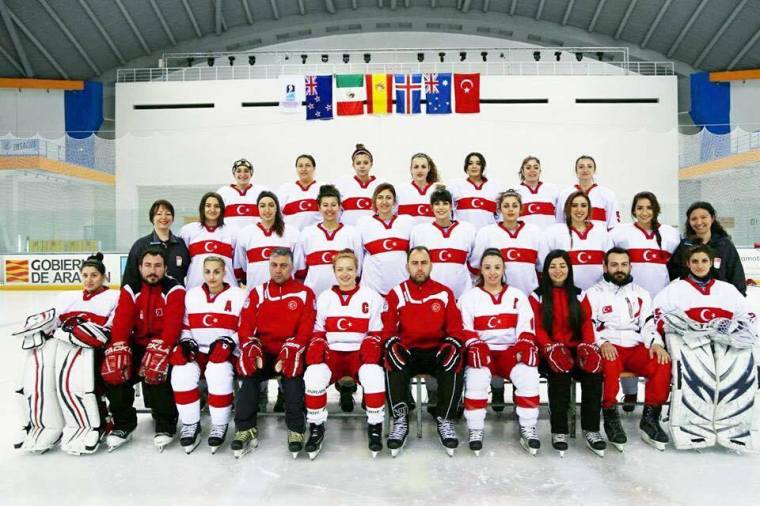
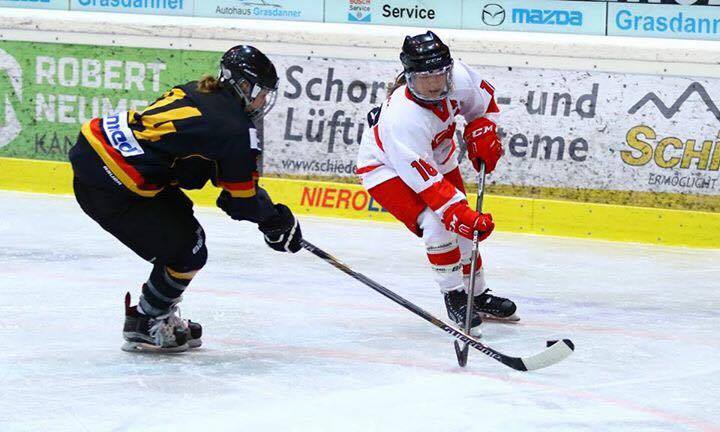


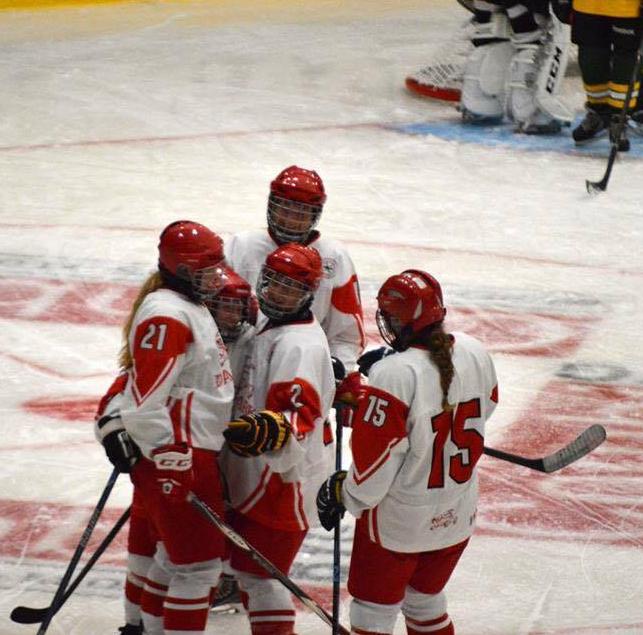
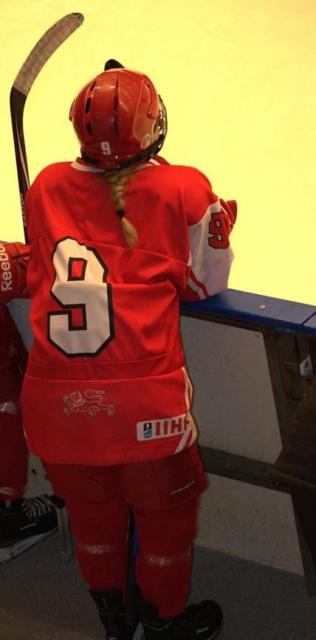

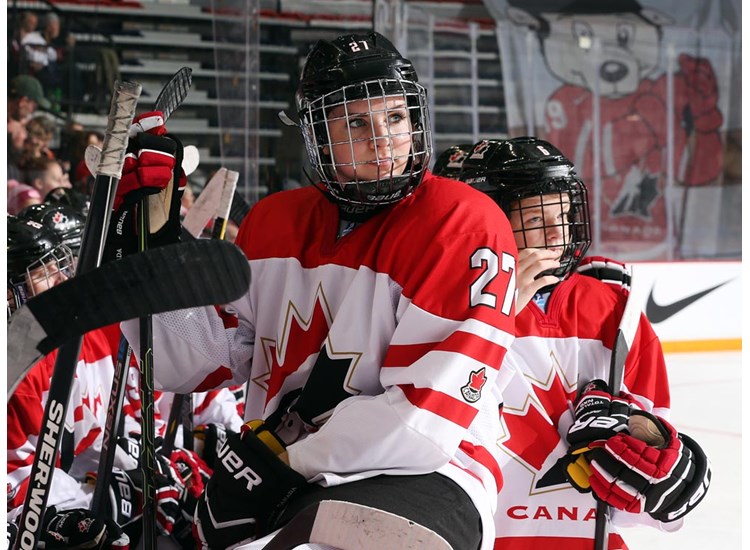
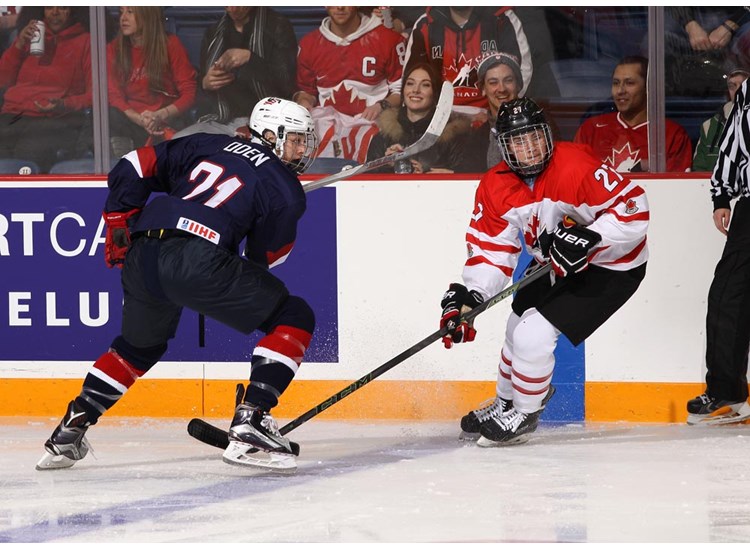

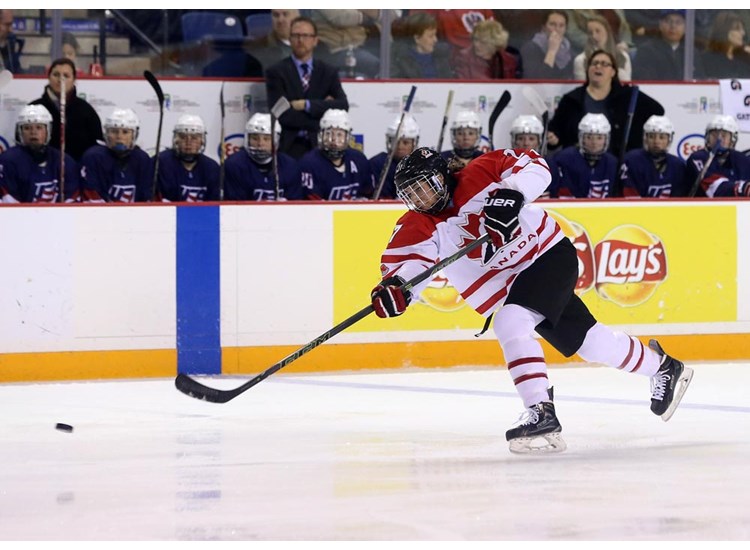


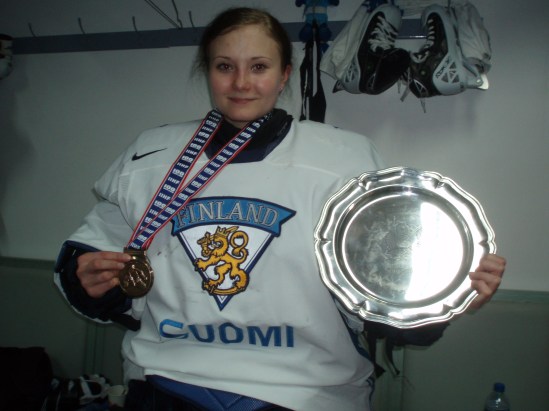

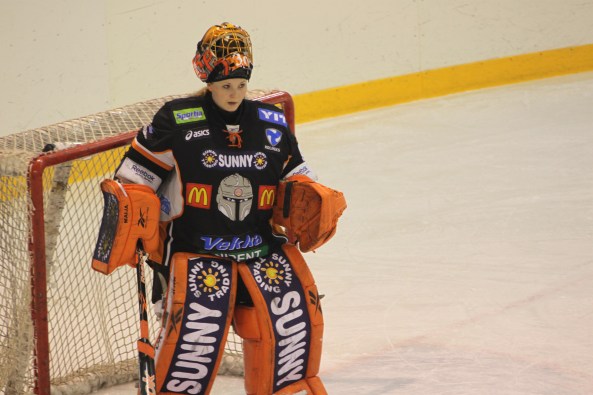

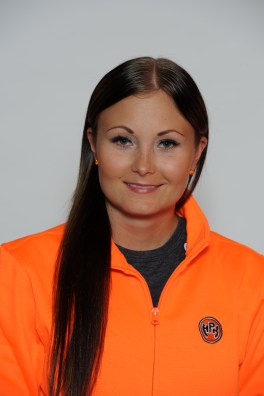

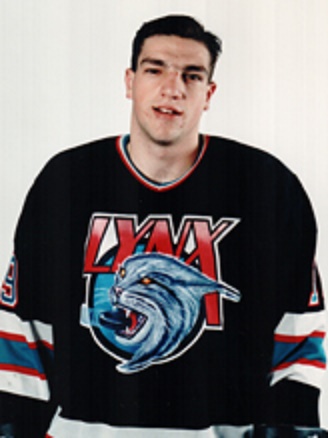
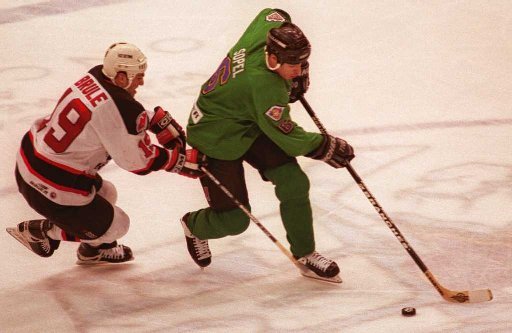
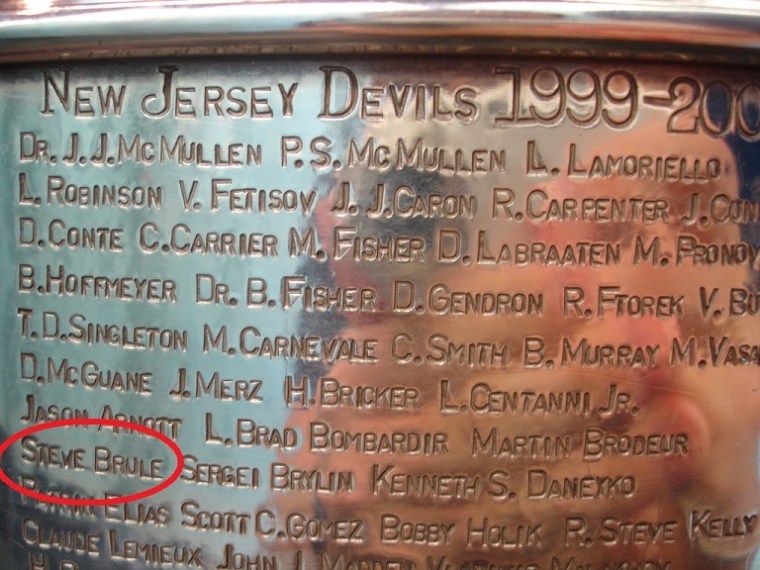
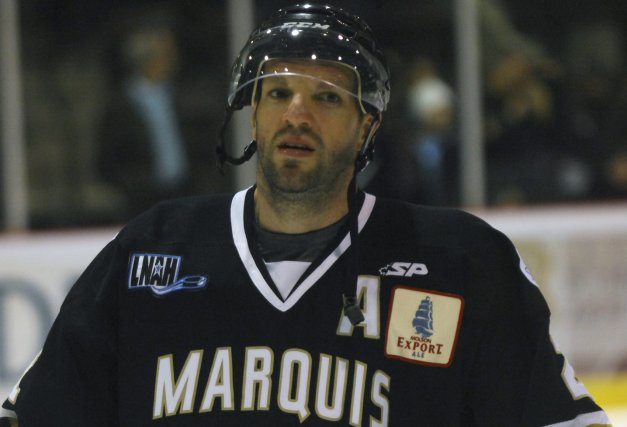
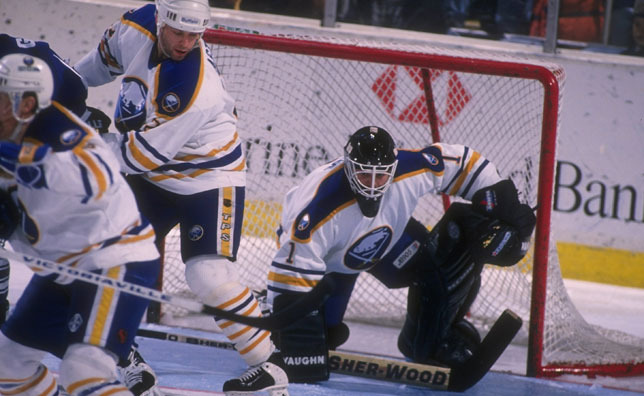
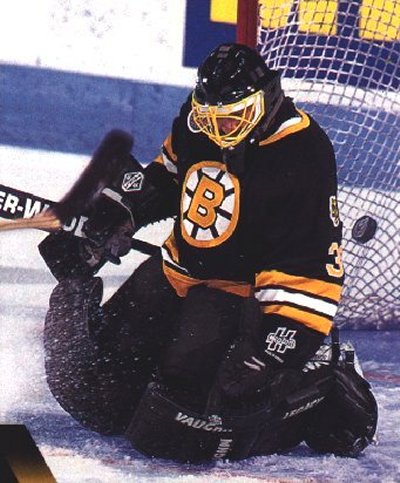




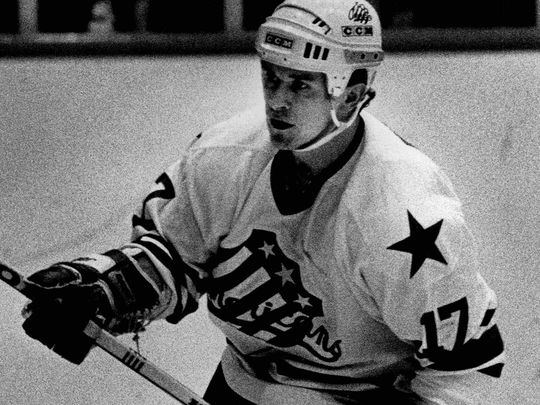

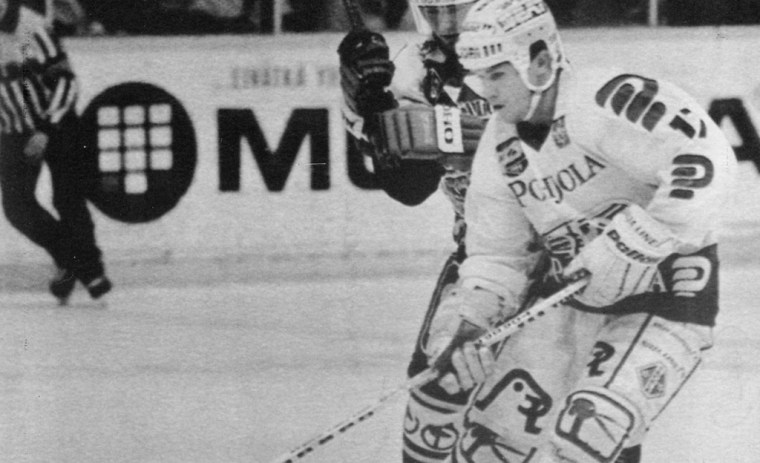
 Musings of a Hockey Enthusiast