Unsung Islander: Anders Kallur

anders kallur
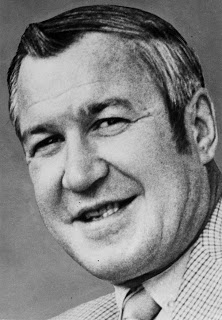
Anders Kallur, a member of all four New York Islanders’ Stanley Cup championship teams, was the unsung hero of those great Long Island teams.

There is definitely something to say for genetics. Having two twin daughters who are Olympians when dad was a four-time Stanley Cup champion shows that the “apple doesn’t fall too far from the tree”. Anders Kallur’s twin girls, Susanna and Jenny, are both former hurdlers who have competed for Sweden at the Olympics; the first time competing together in 2004 in Athens, and then Sanna competing solo in 2008 in Beijing. Modern sports enthusiasts may recognize the Kallur surname more from the twins’ Olympic appearances than for dad’s accolades on the ice.

Perhaps this is mostly due to the fact that winger Anders Kallur was more of the unsung hero for those great Islanders’ teams in the early 1980s, and more often it goes forgotten that he was such an integral part of the team. Everyone knows the big names, many of whom are also Hall of Famers, from the string of championship runs for the New York Islanders. Captain Denis Potvin, sniper Mike Bossy, magician-like playmaker Bryan Trottier, the ornery netminder Billy Smith, giant-sized Clark Gillies, along with the well-known role players like Bob Nystrom, John Tonelli, Brent Sutter, Butch Goring, and Ken Morrow. Those are the names that no one forgets. Those are ten different names that come to mind when naming members of those Islanders teams before getting to Anders Kallur, and there is still no guarantee that when rattling off the names that Kallur would have even been the eleventh to come to mind.

This is unfortunate in some ways, because Kallur was certainly a vital cog for the Isles. And there is no way that you can be a member of four consecutive Stanley Cup winning teams unless you were a necessary part that was utilized to equal the greater sum. Anders Kallur certainly did his part well.

Perhaps he is often forgotten because he did not have the NHL lengthy career like those of Trottier (18-seasons), Smith (18-seasons), Nystrom (14), Potvin (15) or Gillies (14). Anders Kallur only played 6-seasons in the NHL. And when you stop to think that in only 6-seasons he won the Stanley Cup 4-times, that is certainly a remarkable NHL career.

Kallur was downright accurate too. Twice he recorded shooting-percentages of over 20%; in 1981 when he found the back of the net on 22.1% of of his shots, and again the following season when he banked 24.3% of his shots. Nearly a quarter of every shot he took ended up as a goal for the Isles during those seasons. Kallur’s career shooting percentage average is an impressive 17%.

And it was not as if Ander Kallurs was only putting up single digit numbers. On the contrary, Kallur had a rookie season of 22-goals in 76-games, followed up by a sophomore outpouring of 36-goals in 78-games, and then 18-goals in an injury shortened 1981-82 season campaign of 58-games.

In addition to putting the puck in the net, Anders Kallur was very much responsible in his own end and on the penalty-kill. In his six NHL seasons, Kallur posted a career total of 19 shorthanded goals. Kallur’s teammate and Hockey Hall of Famer Bryan Trottier also scored 19 career shorthanded goals. But Trottier did it in 12 more seasons than Kallur and in 896 more games! Not to mention the fact that Trottier was a far more prolific scorer than Kallur. In fact, not one of Kallur’s Islanders’ teammates from the four consecutive Cup runs scored more shorthanded goals as a member of the Islanders that Anders Kallur (NOTE: of all of Kallur’s teammates, only Butch Goring scored more career shorthanded goals with 40 total, but most of those came with the Los Angeles Kings; Bryan Trottier and Bob Bourne are tied with Kallur at 19 career shorties, but not all of their 19 were scored with the Islanders). Kallur’s finest season for shorthanded output was his first year in the NHL when tied for first overall with the Flyers Reggie Leach, as both wingers knotted 4-shorthanded goals a piece for most in the league.

His penalty-killing and defensive capabilities certainly garnered at least some attention throughout the league. In 1981, Kallur tied for 10th for Frank J. Selke Trophy voting as the NHL’s best defensive-forward. The following season in 1982, he was 22nd overall in the voting. But in an era when the Montreal Canadiens Bob Gainey was the chief forward at defensive responsibilities, it was a long shot for Kallur no matter what.

Anders Kallur would retire at the end of the 1984-85 NHL season. It would be the only season in Kallur’s career that the Islanders would not make it to the Stanley Cup Finals. During his final season, Kallur was the third oldest player on the team at 32-years of age. The second oldest, Butch Goring, would be traded to Boston, while battlin’ Billy Smith’s best years in net were behind him and youngster Kelly Hrudey took over the starting role. The story was being closed on the Islanders’ glory days, and new, young talent in the likes of Pat LaFontaine, Patrick Flatley, Hrudey, and Gerald Diduck emerged. It was time to move on.

Though his name might not be as household as Bossy, Gillies, Nystrom or Trottier, it is important that attention is paid to Anders Kallur’s contribution to the Islanders’ dynasty. With his defensive mindedness as a forward, it would be safe to assume that Kallur made a significant difference for the betterment of the Isles when he was on the ice. Perhaps he stole them a shift here, or a game there. Or maybe even a series. Being defensively responsible as a forward on the ice can oftentimes go unnoticed because it is not as glamorous as Bossy scoring his 50th goal in 50-games. But defensive responsibility matters. It wins hockey games. Kallur’s career and contributions matter. And I would like to think that his play was a necessary ingredient in the Islanders’ recipe for four straight Stanley Cups.



Coming up short: Brian Propp…

Brian Propp career
In a 15-year NHL career with the Philadelphia Flyers, Boston Bruins, Minnesota North Stars, and Hartford Whalers, Brian Propp made it to the Stanley Cup Finals five times only to come up short on each occasion.

What do you say for those players who came so close to a Stanley Cup championship, only to have lost? Even harder, what can you say for those players who came so close, only to lost three, four, even five times?! Few would know better what it feels like to lose in the Stanley Cup Finals than 15-year NHL veteran and 1,000-point scorer Brian Propp. After all, Brian Propp made it to the championship round FIVE times in his career, and each time came up short.

The 14th-overall pick in the 1979 NHL draft, Brian Propp made it to the Stanley Cup Finals in his rookie season as a member of the Philadelphia Flyers. Propp played in all 80-regular season games for the Flyers that year, as well as all 19-playoff games. As a rookie, Propp finished third overall in team scoring with 75-points (34-goals, 41-assists) during the regular season, and tallied another 15 (5-goals, 10-assists) during Philly’s run to the Finals. The Flyers were laden with high-energy youngsters like Propp that season, but would fall to the New York Islanders in six games in the Stanley Cup Finals; it would be the first of four consecutive championships for New York.

Certainly not a bad set of circumstances at the time for Propp. Making it to the Finals in only his rookie season, most youngsters might take the experience for granted and think that achieving a Stanley Cup championship might be easier than expected and happen with some regularity. But for Brian Propp it would not be the case. Propp would make it all the way to the Finals round two more times as a Philadelphia Flyer; once again in 1985 when they would be backstopped by the late Swedish goaltending phenom Pelle Lindbergh, and then in a 1987 seven-game heart breaker in which their own goaltender, Ron Hextall, would win the Conn Smythe Trophy as the most valuable player in the playoffs, despite being the losing netminder. Both Finals losses coming at the hands of the Wayne Gretzky-led Edmonton Oilers dynasty.

I suppose in some ways for Propp it may have felt like three-strikes and out. Propp would move on from the Philadelphia Flyers via a mid-season trade with the Boston Bruins in March of 1990 for a 2nd-round draft pick. In less than a season with his new team, Propp would find “immediate” success once again, as the Bruins, backstopped by the eventual Jennings Trophy winning goaltending tandem of Andy Moog and Rejean Lemelin, and the eventual Norris Trophy winning defenseman Ray Bourque, would make it to the Stanley Cup Finals; a fourth time for Brian Propp. In 20-playoff games, Propp would chip in 4-goals and 9-assists. For a fourth time though, it was all for naught – Boston would be knocked off in 5-games by the Edmonton Oilers who would win their fifth Stanley Cup. The 5-game series was extremely lopsided with Propp’s Bruins mustering a mere 8-goals in the series while Edmonton exploded for 20. Propp himself would go pointless in the series.

Propp’s fifth and final shot at a Stanley Cup ring would be right around the corner. The following season, his first as a member of the Minnesota North Stars, Propp finished third in team scoring during the regular season by tallying 26-goals and 47-assists in 79-games. Of the 16-teams that qualified for the playoffs in the 1990-91 season, the North Stars finished 15th and went on a Cindrella-esque run. Averaging a point per game during the playoffs (23-games, 8-goals, 15-assists, 23-points), Propp was one of the driving forces behind Minnesota’s improbable run. And despite a strong level of experience from other veterans like Bobby Smith, Neal Broten, Stew Gavin, and Curt Giles, the North Stars would prove no match for Mario Lemieux’s Pittsburgh Penguins who would claim the Stanley Cup in Minnesota during Game Six.

Brian Propp certainly played his heart out to win the Stanley Cup; he just came up short. If you add up the totals of the five Finals series that Propp played in you can certainly appreciate the effort, at the very least. Propp played in a total of 29 Stanley Cup Finals games, and recording 10-goals and 12-assists for 22-points. His best effort would be the 1987 Finals series, when Brian led the Philadelphia Flyers in scoring for the Finals with 9-points (4-goals, 5-assists) in 7-games.

In one’s own heart and mind, how can it be resolved to come so close on five separate occasions only to come up short? If I was in Brian Propp’s shoes I may have a difficult time reconciling this with myself. But Propp also had a very successful NHL career. In over 1,000 regular season games, he averaged nearly a point per game; 1,004-points in 1,016-games. Propp played in the NHL All-Star Game in 1980, 1982, 1984, 1986 and 1990. Propp also holds the NHL records for most career playoff power play goals, most career playoff assists, and most career playoff points all by a left-winger. Those are all noteworthy accomplishments in a lengthy career.

While he never got to raise the Stanley Cup, nor was his name ever inscribed for permanent display, it would be tough to say that Brian Propp did not have a superb career. I think of the Buffalo Bills losing four straight Super Bowls in a row. At the time, it is heartbreaking if not downright embarrassing. But as the years pass and more time to reflect has gone by, to make it to a championship series five times is remarkable for any athlete, in any sport, win or lose. Brian Propp, you were one of the elite competitors of your sport.


Czechmate: Andrej Sustr

sustr
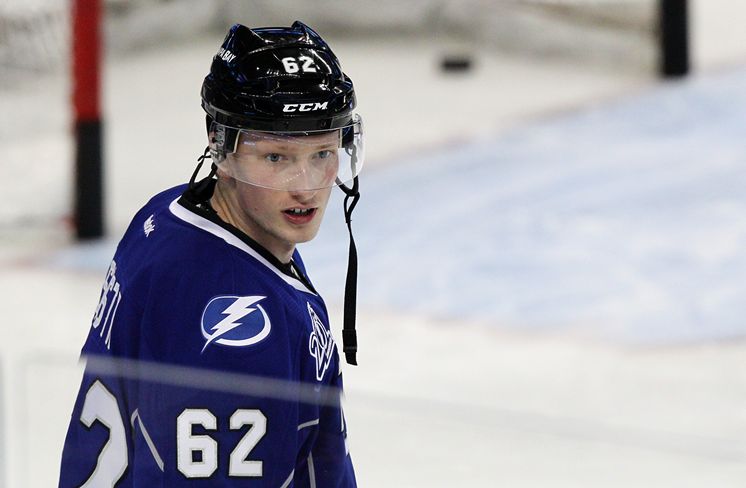
The up and coming defenseman for Tampa Bay that no one talks about, Andrej Sustr

In my estimations he has all of the potential to become the next Zdeno Chara. Especially the size! At 6’8″ and 225lbs., he is the largest hockey player that you have probably never heard of. Halfway through his second full season in the National Hockey League, Andrej Sustr is the player I am most excited to watch for in the years ahead.

Sustr reminds me a lot of his fellow countryman, Richard Smehlik. Quiet but always there to depend upon. Not flashy, but very steady. Sound at his position, and only getting better. If he develops a mean streak like Chara displays from time to time – look out! This guy will be devastating.

I like the description that has been used more than once on Chara; “You don’t want to wake the giant”. Because when Chara gets upset or takes matters into his own hands on the ice, he is more powerful than anyone else in the game. He manhandles opposing players and he is literally an unstoppable force. This helps Chara’s game to be as effective as it is, and what has allowed him to be successful for so long. By being able to impose a little fear into opposing players, knowing that they do not want to be on his bad side, Chara is able to create more space for himself on the ice to dish a clean pass or drive home one of his rocketed shots on net. Chara creates opportunities that most players have to fight for because of his immense size and the intimidation factor that he possesses. At 25-years of age, it remains to be seen whether Andrej Sustr will garner that same intimidation factor. But like Chara, as time goes along Sustr can continue to improve his all-around game and demonstrate that he is a very sound defenseman regardless. Something that Chara did when he first broke into the league too; took the time to hone his skills until they became elite.

It is very hard for me to imagine that Andrej Sustr was never drafted into the NHL. Sustr left the Czech Republic at the age of 17 to move to the United States where he would play junior hockey as well as collegiate hockey for three years with the University of Nebraska-Omaha Mavericks. Sustr would participate in a handful of development camps for NHL teams before he was eventually recruited and signed professionally by the Tampa Bay Lightning in 2013. Everyone knows that Lightning General Manager Steve Yzerman was a genius of a hockey player on the ice. As GM for Tampa, Yzerman is demonstrating that he may very well be a genius on the Management side as well, as under his guise numerous talented players have been brought to the Lightning, including “The Triplets”, Ondrej Palat, Nikita Kucherov and Tyler Johnson. By signing the giant-sized Sustr as an undrafted free agent, Yzerman might not only be a genius but a seer – who wouldn’t want to have the next Zdeno Chara on their hockey club?

In Sustr’s first full season in the NHL, 2014-15, he served as a stalwart defenseman on the blueline for Tampa Bay’s run to the Stanley Cup Finals where they would lose in 6-games to the Chicago Blackhawks. Sustr played in all 26-playoff games for the Lightning that season. Not bad for an undrafted rookie. Sustr registered a goal and an assist during those games, along with 18-penalty minutes. On a roster that already housed veteran, well-accomplished defensemen Victor Hedman, Braydon Coburn, Anton Stralman and the like, it was enjoyable to watch Sustr do his part and find his niche for Tampa as they made their way into the Finals:

Sustr’s first-round playoff goal against the Detroit Red Wings in 2015:

Made up of entirely the same blueline that led them into last year’s Finals, now in the 2015-16 season, Tampa’s defense is still causing opposing teams to be envious to no end. It is a blueline that will make the Lightning poised to take another run at Lord Stanley’s Cup. If I were coach Jon Cooper, I would continuously pair the larger than life Sustr with the Lightning’s top defender Victor Hedman (who stands 6’7″ and 225lbs. himself), and dare offenses to get by these twin towers.

While only time will tell as to how great of a player Andrej Sustr will become, I am banking on him not disappointing. I trust Steve Yzerman’s judgment. I trust the Lightning scouts’ judgment. And I trust in what Sustr has displayed thus far. While Zdeno Chara is in his twilight, Andrej Sustr is giving all appearances that he is prepared carry the torch as the NHL’s next big man. The new giant that you do not want to wake.


Coffee with “The Crow”

*Note: this was an article that I wrote in August, 2011. Wanted to share it again. 

The second coach in Buffalo Sabres history, Joe Crozier

A few years back while having morning coffee with my future wife, while sitting at the nearby Tim Horton’s restaurant in the suburbs of Buffalo, I recognized a familiar face making his way through the doorway. I had never met the man before, but any true long-time Sabres fan would have recognized him. Our eyes met and he smiled and nodded to me. I kind of beamed from his acknowledgement, and said “Hi Joe! How are you?”. He proceeded to move into line to grab his morning coffee and a box of Timbits. It was former Sabres coach, Joe Crozier; “The Crow”.

I probably would have thought nothing more about it, other than perhaps to say to people, “Hey, I saw Joe Crozier this morning at Tim Horton’s“, but Joe actually proceeded to come over and sit with us once he had gotten his order. He really did not have to. He didn’t know me or my girlfriend. He is an older gentleman who is not in the best of health, and I am sure that he is also very busy in his personal life. I can certainly see how this man, a great hockey coach in his own right and highly respected in various hockey circles, had heavily endeared himself both to the players that he coached and to those of the community.

Mr. Crozier stayed with us a good 15-minutes, drinking coffee, updating us on his health and what he was doing these days, signed an autograph for the girl I would eventually marry, shook my hand and said goodbye as he was leaving to make his way up to Tim Horton’s “Camp Days” over the border in Welland, Ontario. He took time out of his day to stop and spend a portion of his morning with us. I won’t ever forget how he extended that courtesy to strangers/hockey fans.

Joe Crozier was the first head-coach to lead the Buffalo Sabres into the playoffs when he did so during the 1972-73 season; only their third season of existence. This was also the first full season that the newly united “French Connection” line of Gilbert Perreault, Rick Martin and Rene Robert was assembled. There were a few rookies on that team as well and also a group of players in their early-mid 20s that were trying to make names for themselves; hoping to land permanent jobs in the NHL. Don Luce, Craig Ramsay, Jim Schoenfeld, Larry Mickey, Mike Robitaille, Larry Carriere, Paul Terbenche, Dave Dryden, team captain Gerry Meehan, Steve Atkinson and others all saw their game improve from the guidance and knowledge that Crozier imparted to them. And though for the most part that Sabres team was very young, Crozier and general manager Punch Imlach blended in a nice mix of veterans as well, with the likes of 35-year old multiple time Stanley Cup champion Larry Hillman, the acrobatic netminder and former Conn Smythe Trophy winner Roger Crozier, and the late, great Tim Horton, who also was a perennial Stanley Champion and an eventual Hockey Hall of Famer.

Regardless of the experience levels or talent levels of those Sabre players in ’73, one thing that they all say in interviews and in storytelling is that Crozier taught them to be closely knit and to have fun. They were a team that loved playing together and believed in where Crozier was leading them. I am certain that all of those players have been able to look back upon how positively Joe Crozier effected their playing careers and their lives.

When the Buffalo Sabres welcomed back their alumni of 40-years on April 8, 2011, it was an incredibly heartwarming and emotional experience to see two-thirds of “The French Connection”, Gilbert Perreault and Rene Robert, guiding their former coach onto the ice surface for the ceremony, while Crozier walked with Rick Martin’s jersey in hand (Martin had sadly passed away less than a month prior). The symbolism could not be missed. In their youth, their coach had guided them forth towards camaraderie and team success. Now in his old age, their steadying hands guided him back to those great times that they had shared so many years prior.

When I think of how Joe Crozier took some time out of his day to spend it with me for just cup of coffee and small talk, it is no wonder that his former players hold him in such high-regard; not only as a coach but as a person as well. You get a sense that Crozier can see the importance of everyone whom he meets and the role that they play either on the ice or in life. When a coach is able to recognize the significance of each individual and make them feel that their particular job matters and is vital, that coach is then able to orchestrate a true team that can succeed by believing in each other and counting on each other. I suppose that it is the same way in everyday life as well. Maybe some people, like Joe Crozier, realize that more than others and that has what has made them successful and respectable in life.

Remembering Gilles Meloche

The teams he tended goal for were oftentimes the NHL’s basement dwellers. He still sits currently fourth-place all-time for most losses by a goaltender. Two of the teams he played for (albeit the same franchise in two different cities) do not even exist anymore. But his quick reflections and ability to keep a very poor team in the game on any given night enabled Gilles Meloche to carve out a 18-year NHL career. A career which saw him play in a total of 788 regular season games in five different cities across North America.

The very first time that I bought a pack of hockey cards was in the summer of 1988. I rode my bicycle up to the local drugstore which has since closed down twenty years ago. It was the 1988-89 edition of Topps hockey cards; the one that included Brett Hull’s rookie card and Wayne Gretzky’s first as a Los Angeles King. In the first pack I bought, I received my first ever goalie card – Gilles Meloche. Though this would be the last series to ever release a card of Meloche, he instantly became my favorite goaltender.

gilles_meloche_2
Gilles Meloche’s 1988-89 Topps hockey card; the last series to include Meloche and the very first card of an NHL goaltender I ever bought.

Meloche became a mild obsession for me. Into my teenage years and up into adulthood, I had to collect each of his hockey cards. From his 1972 rookie card with the California Golden Seals, into his time with the Cleveland Barons and the Minnesota North Stars. Once when I was 15, I waited in the pouring rain for a sports memorabilia store to open and then waited an additional hour inside while one of the store employees searched through boxes of cards for Meloche’s 1983 O-Pee-Chee card with the North Stars.

Here is an old pizza commercial that Meloche starred in during the early-1980s with the North Stars.

My favorite Gilles Meloche hockey card would have to be his 1975-76 Topps card depicting him with the California Golden Seals. I love the colors of the Seals’ uniforms from that time; teal and gold. I also like the youthful exuberance on Meloche’s face in the card’s photo; he was just about to enter into the prime of his career at that point, and had already been backstopping a woeful Seals team for a few seasons by that time.

Meloche also had arguably the coolest goaltending mask of all netminders, when he suited up the Cleveland Barons (the former California Golden Seals) who had re-located to Cleveland. While a black “B” backed by blood-red and an almost menacing top-hat above the face, Meloche exuded baron in his adornment.

gilles-meloche
Gilles Meloche and his mask with the Cleveland Barons.

As I collected his cards and learned more about his career, it began to bother me that Meloche wasn’t a “winner”. He perennially played on bad teams that went nowhere. But still, how could you play 17-years in the National Hockey League without being considered a great success? This troubled me. I began to fantasize and imagine what it might have been like if Meloche was the goaltender for the Montreal Canadiens or the Philadelphia Flyers during the 1970s, instead of the Seals and Cleveland Barons. Gilles would have won numerous Stanley Cup championships, and his stats for goals against and save percentage would have likely been out of this world. But this was all a very big “what if?”, and truly did not matter because it never happened.

meloche seals
My favorite hockey card of Gilles Meloche; the 1975-76 Topps release with a poised Gilles donning the teal and gold of the California Golden Seals.

I found solace in the fact that Gilles Meloche at least made it to the Stanley Cup Finals one time in his career. That was something that I could look upon as a positive achievement in his career. It was during the 1980-81 NHL season when the North Stars goaltending tandem of Meloche and teenage rookie Don Beaupre backstopped Minnesota to a Stanley Cup Finals showdown against the New York Islanders, who were into their second season of a four-year string of Stanley Cup championships.

Perhaps for the first time in his career, Gilles was surrounded by a nice array of talent and did not need to shoulder it all alone. Another rookie, Dino Ciccarelli, exploded for 14-goals in 19-playoff games during Minnesota’s run at a championship. Other assets to the North Stars that season were all-star Bobby Smith, along with Steve Payne, Craig Hartsburg, Al MacAdam, USA Lake Placid Olympic gold medalist Neal Broten.

In the Stanley Cup Finals though, against a powerhouse Islanders offense, Gilles would be in net for two of the five games against New York, suffering losses each time and allowing a staggering 12-goals in the two contests for a 6.00 goals against average. Still, it was a chance for Gilles to play on hockey’s biggest stage. This was truly a momentous occasion in a way, as the playoffs would not come often for Gilles. In 17-seasons, Gilles only saw playoff action in 6 of them…

Having a spot in my heart for Gilles Meloche since my childhood, I always held out hope that someday, somehow he would have his “place in the sun”. Meloche retired from active play in 1988 as a member of the Pittsburgh Penguins. Upon retiring, Gilles would remain with the Penguins as a scout for the team, and, eventually would find the success he so greatly deserved in the game of hockey. Doing his part toward bringing a championship to Pittsburgh, Meloche would get his name on hockey’s “holy grail”, the Stanley Cup, three different times as part of Penguins championship teams; in 1991, 1992 and 2009. So in the end, my wish for my favorite goalie came true; he became a winner and has him name inscribed for all time.

Bondra for HHOF

bondra 1
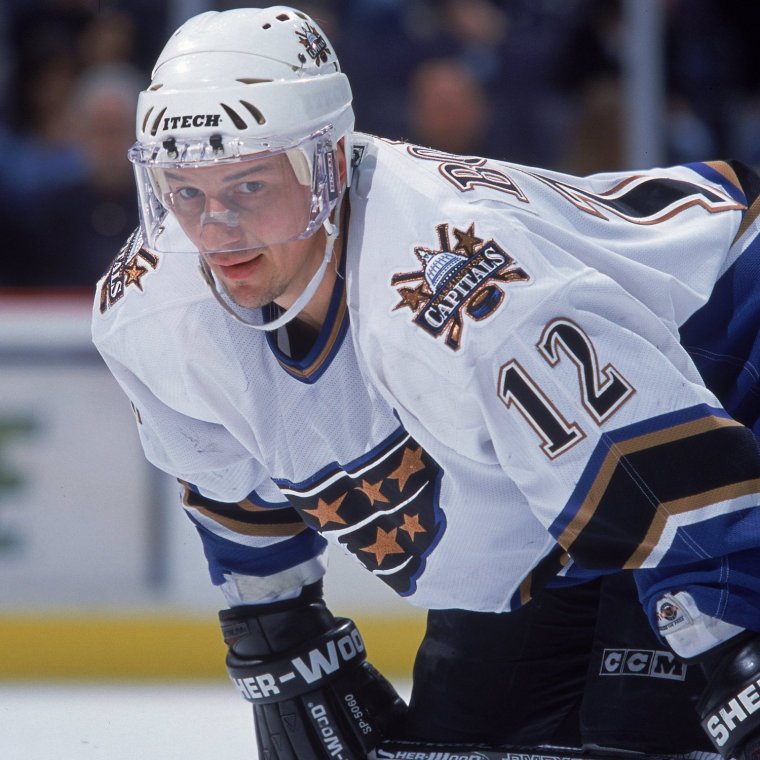
Washington Capitals great, Peter Bondra, should be more than just a consideration for the Hockey Hall of Fame.

It boggles my mind that Slovakian sniper Peter Bondra is rarely, if ever, mentioned for candidacy for the Hockey Hall of Fame. Each year leading up to the induction ceremony, the list of potential candidates for induction is brought out. Maybe I am just not looking closely enough but Bondra never seems to show up on that list, of what usually seems to be mostly North-American born hockey players. Perhaps the biggest argument against Bondra’s induction is that he never won the Stanley Cup. Not to be immature, but – big deal.

Bernie Federko, Gilbert Perreault, Marcel Dionne, Borje Salming, Phil Housley, Mats Sundin, Adam Oates, Pavel Bure, Mark Howe, Mike Gartner, Rod Langway, Dino Ciccarelli, Cam Neely, Pat LaFontaine,  Dale Hawerchuk, Peter Stastny, and Michel Goulet are all contemporaries (for the most part; they are all relatively close at least in terms of time period) of Bondra’s who are in the Hockey Hall of Fame but never won a Stanley Cup. Some of those players put up less impressive numbers than Bondra even, and are still in the HHOF.

Numbers. That magical word that seems to run rampant through sports right now with all of the analytics that exist today. So let’s talk Bondra’s numbers.

Peter Bondra put the puck in the net a total of 503-times during his regular season career. 500 has long been one of those magic numbers in the NHL game that are aligned with Hall of Fame candidacy. On January 10th, 2016 another incredible Washington Capitals sniper, Alex Ovechkin, became the 43rd player in NHL history to hit the 500-plateau. Bondra, who as a Capital himself tallied 472-regular season goals, was the 37th player in NHL history to hit that mark on December 22nd, 2006. In a 10-year time span, only 5 other players would make that number between Ovechkin and Bondra. It would seem then that total regular season goal scoring alone should be enough of an accomplishment to solidify Bondra.

Bondra 2
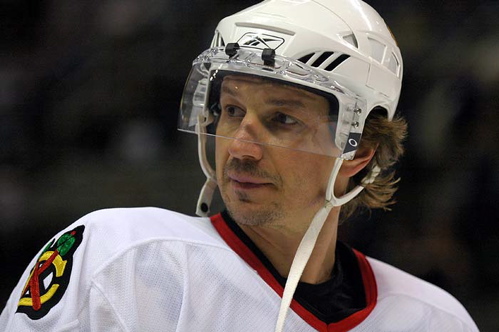
With the Chicago Blackhawks, Bondra would score his 500th NHL regular season goal.

Still not impressed? Then let’s look at how prolific a scorer Bondra was. The 1990s were arguably the last of the high scoring days of NHL hockey, when there were still regular 50-plus goal scorers each season. Peter Bondra, who was a two-time 50-goal scorer himself was one of the most productive of that time period. If you look at the seasons of 1990-91 up through 1998-99 and goal scoring productivity, you will see what I mean.

Adding up Bondra’s season-to-season tallies during that time frame, he found the back of the net a total of 316-times. Though not by very much, that puts Peter Bondra in fifth place out of most productive goal scorers during that same time frame; the most productive being “The Golden Brett”, Brett Hull with a huge number of 440-goals during that span. The ageless Jaromir Jagr, who scored 345-goals during that same time frame would be second place, while the only other players to out-snipe Bondra would be Brendan Shanahan with 335-goals and Luc Robitaille who notched 321. The others to follow, in order, would be Alexander Mogilny at 314, Teemu Selanne and Joe Sakic each at 313, Steve Yzerman at 301, Mats Sundin has 296, Dave Andreychuk with 290, Mike Modano at 282, Sergei Fedorov at 274, Mario Lemieux with 268, and Pavel Bure with 267. Hopefully I did not forget to include anybody in my tallying, but regardless, those numbers put Peter Bondra in great company.

Lastly, there are numerous other accolades that Bondra accomplished during his storied career that are worth noting. A gold medal at the World Hockey Championships with Team Slovakia in 2002, and a bronze in 2003; five NHL All-Star Game appearances (1993, 1996, 1997, 1998 and 1999); the NHL goal-scoring leader in 1995 and 1998; and a Stanley Cup Finals appearance in 1998.

When looking at Bondra’s career as a whole, he should seem an obvious choice for induction into the HHOF. And if not an inductee, at the very least he should be one of those names in the mix each year that makes it difficult to vote who makes it in or not.

Val James

val james
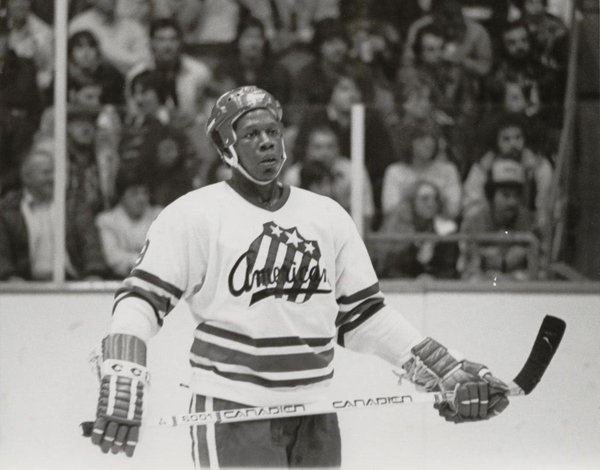
First U.S.-born black player to play in the NHL, Val James shown here with the AHL Rochester Americans.

I had first heard of Val James in 1997 when I read Ross Brewitt’s book Sabres: 26 Seasons in Memorial Auditorium. There is an excerpt in the book where current Sabre at the time Randy Burridge was being interviewed about his memories of the old Aud. Burridge grew up in Fort Erie, Ontario which is just over the Peace Bridge from Buffalo. In fact, many former Buffalo Sabres during the 1970s and 80s lived in Fort Erie and made the commute over the bridge. In his memories of attending Sabres games as a youth in the early 80s, Burridge recalled memorable battles between the Sabres and the Boston Bruins, and after initially drawing a blank on the player’s name, was able to recall Sabres behemoth Val James being involved in those rough and tumble games in particular, especially during Buffalo’s 3-1 playoff series loss to the Bruins in 1982; Val James played in 3 of the 4 games against Boston.

In 1982, I was all of 2-years old so I had no recollection of Val James. But after reading Burridge’s memories of this imposing Sabres player I became quite interested in knowing more about him. During college with the Internet at my fingertips I did a Google search on James and was surprised to see that Val James is African-American, and was also in fact the very first U.S.-born black player in the National Hockey League. My interest piqued even more so, and my mind was blown as to why there was little to no information about the NHL’s first U.S.-born black player.

Years proceeded to go by. Somewhere during my mid-20s I purchased a DVD collection of Buffalo Sabres hockey fights throughout the team’s history. Most of the videos are on YouTube today, and you occasionally see Sabres fans sharing them on Facebook. I felt like I hit the jackpot when I found that included in the compilation was a rare gem of Val James squaring off with Bruin legend Terry O’Reilly. Finally getting a chance to see James in action, I also stumbled across Val’s scrap with another Bruin, Keith Crowder, while digging for more fight videos of James online. From watching these old videos of Val, you could easily see the power and strength that he possessed, and the wherewithal of being on the ice to protect his teammates. The footage also made you wonder how James didn’t last longer in the NHL, especially when he obviously was imposing and could hold his own with the game’s toughest.

Some great footage of Val James on the Sabres bench getting some work done on his face after taking a high-stick around the eye during the 1982 playoffs against the Boston Bruins:

Almost exactly a year ago, coinciding with Black History Month, Val James’ autobiography was released, Black Ice: The Val James Story. What a privilege to read this book! It wasn’t just video footage or vague recollections of him; this was Val’s own story, in his own words, and I was finally able to learn about his life. I have read a multitude of hockey biographies and autobiographies, but I have to say that Val James’ is one of the best!

black ice
Val’s autobiography, “Black Ice: The Val James Story”

In particular, I enjoyed reading Val’s memories of his 1982-83 American Hockey League season with the Rochester Americans; the farm team of the Buffalo Sabres. The Amerks won the Calder Cup trophy that season under the direction of coaching legend “Iron Mike” Keenan. Val’s teammates on that team including 4-time Stanley Cup champion Yvon Lambert, journeyman netminder Phil Myre, longtime NHLer Randy Cunneyworth, and other former NHL players Jim Wiemer, Gary McAdam, J.F. Sauve, and goaltenders Paul Harrison and Jacques Cloutier.

If you have not read Black Ice as of yet, I strongly encourage you to do so. Especially those of you who are like me and have always wanted to know more about the somewhat legendary Val James. I am also glad to see that since Val’s release of the book that he is actively involved and visible in Buffalo and Rochester with both the Sabres and Amerks alumni. You hear nothing but good things about Val and how he is such a nice person; beloved by fans, teammates, and the communities that he was a part of.


Eric Boulton: The True Last of His Kind

He has played all of one game this season. And for that one game, all of 8:28 in ice time. He is 39-years old, making him one of the oldest players in the NHL; truly ancient for a hockey player. With all the talk about John Scott being selected to the NHL All-Star Game, and as a captain no less, it bothers me that most have forgotten about Eric Boulton. If John Scott is believed to be a true enforcer, then he is also not the last true enforcer, nor is Scott the oldest or most experienced. That honor would go to Boulton.

Eric+Boulton+b6ZXFT3A47zm
In his 20th season of professional hockey, New York Islanders forward/enforcer, Eric Boulton.

After Jaromir Jagr (43-years old), Patrik Elias (39-years old with an April birthday) and Dan Boyle (39-years old with a July birthday), Eric Boulton (born in August of 1976) is the fourth oldest player in the NHL for the 2015-16 season. Boulton began his professional career in 1996 with the Charlotte Checkers of the East Coast Hockey League, and during the 2000-01 season began his NHL career with the Buffalo Sabres. Eric Boulton’s mentor and linemate when he first broke into the NHL was legendary enforcer, Rob Ray, one of only a handful of players to record over 3,000 penalty-minutes in their careers.

As a native Buffalonian, I have fond memories of Boulton’s time in Buffalo. Boulton and Ray were teammates and linemates on an aggressive fourth line for parts of three seasons, which was often centered by Erik Rasmussen. I recall a toe-to-toe battle in particular that Boulton once had versus “The Russian Bear” Andrei Nazarov when Nazarov was with the Phoenix Coyotes.

Boulton’s NHL career would carry him onto stops in Atlanta with the since relocated Thrashers, in New Jersey with the Devils, and now currently in New York with the Islanders where he has played for the past three seasons prior to this current season. Boulton was actually a mainstay for the Atlanta Thrashers for 6-years, including that team’s one lone playoff run during the 2006-07 season.

Consider Boulton a goon if you would like. During his playing career, he has certainly fought all of those players whom, fairly or unfairly, have been deemed as goons at one time or another. Just name them: Nazarov, Tie Domi, Donald Brashear, P.J. Stock, Steve McKenna, Peter Worrell, Wade Belak, Eric Cairns, Georges Laraque, Jim Cummins, Brad May, Sandy McCarthy, Jim McKenzie, Scott Parker, Stephen Peat, Chris Neil, Milan Lucic, … need I go on? Most of those players have now gone onto greener pastures. Boulton is still here.

In 649 NHL games, Boulton has scored 31-goals and tallied 79-points total, while racking up 1,419 penalty-minutes total. He has played 20-years of professional hockey. I do not care what your standpoint on fighting is – you cannot knock an individual who has done their profession for 20-years.

While the true enforcer in today’s NHL is basically non-existent, one cannot argue Boulton’s longevity. And while the accolades may go to John Scott, likely due to his abnormally large size which makes him stand out rather than for his own longevity or skill (whether it be pugilistic skill or hockey skill), I believe Eric Boulton should receive some form of acknowledgement for his time playing the game of hockey in the best sports league in the world. Please do not forget him. This will likely be his last NHL season.


Disparity in Women’s Hockey

I have long been a fan of women’s ice hockey, going back to the 1998 USA Women’s Gold Medal winning team at the Nagano Olympics. The first female hockey player that I ever became a fan of was USA netminder Sarah Tueting, the young lady who backstopped the USA women to the first ever Olympic gold in women’s hockey. Since that time I have followed the women’s game with much enthusiasm, and have had the opportunity to attend some of the women’s tournaments on the international scene.

Much of last week I spent my time in St. Catharines, Ontario for the 2016 Women’s U-18 World Hockey Championships. And I loved every moment of it! I even brought my mom along with me to the Czech Republic vs. Canada game in front of a raucous, pumped-out Canadian crowd.

IMG_2272
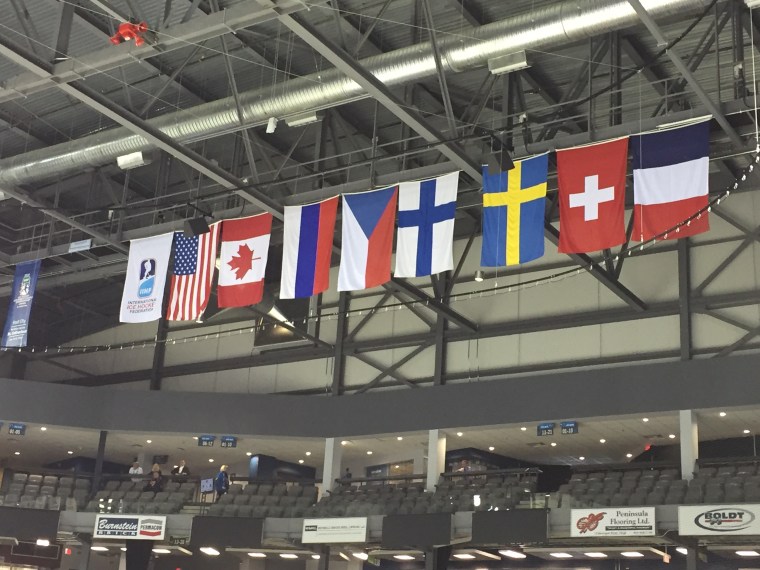
Flags of the eight nations participating in the 2016 Women’s U-18 Championship in St Catharines.

Perhaps the most thought-provoking thing that I noticed throughout the tournament is the disparity that still exists between the top two nations, USA and Canada, and the other countries who compete in the sport. To be blunt, after USA and Canada, no other team even comes close. At the start of every international tournament and every Winter Olympics, it is known that either Canada or USA will be taking home the gold medal while the remaining teams fight it out amongst themselves for bronze.

I am troubled by this for two main reasons. Firstly, though I am an American, I was rooting for Team Czech Republic for the entire tournament, as I know one of the young players on the Czech team personally. I attended each of the Czech Republic’s games, including their heart-wrenching losses of 6-0 to USA and 11-0 to Canada; my heart broke for my friend and her teammates at the hands of that 11-0 loss. So I will admit that I am biased, and wanted the Czechs to perform well and at least medal.

IMG_2837 (2)
Team Czech Republic receiving instructions at a timeout during their January 12, 2016 Quarterfinal loss to Sweden.

Secondly though and perhaps most importantly, for the sake of women’s hockey, we need to see another nation rise to the forefront and give Canada and USA a run for their money. And on an ongoing basis. It worries me that interest may lost in the women’s game if it is always the same two nations winning and nobody else even comes close. Kind of what happened with Laili Ali in women’s boxing. Nobody cares about women’s boxing anymore because no one could be Laili Ali, and the interest in the sport fizzled out.

Now obviously there is more to it than that. These young women are playing for their countries, and no matter what the outcome, competing for their own nation is the greatest accomplishment in sport, and it is not something that can ever be taken away from an athlete. These young ladies also love the game of hockey, and if you love a sport as much as these athletes do, you play and compete for it regardless of whether you win or lose. This is why the game will go on and why even if USA and Canada win every time there is something to say for the hearts of all of the young athletes who participate in this game. For me, being a true enthusiast of the women’s hockey, my interest will never falter either as I simply love the sport.

But for the casual fan, will he or she tire of always seeing the same two nations win? This is what concerns me for women’s hockey in general.

IMG_2271
Team Finland lined up after their 11-1 win over France on January 8, 2016.

So why the disparity after all this time? One would think that between Nagano in 1998 and today’s game in 2016 that the playing field would have evened out to some extent. It has not, and I cannot figure it out.

IMG_2267
France’s goaltender Anais Aurard receiving Player of the Game for Team France after facing 54-shots in an 11-1 loss to Finland.

I surmise that it might have something to do with the size of the athletes. Looking at the majority of the young ladies who suited up for USA and for Canada in the tournament, they look more like grown women, while the athletes of the other nations appear more their age, if not younger. More muscle, more strength for the Canadians and Americans can transfer over to controlling the game and maintaining better puck possession for the entire three periods; something that the other nations were not able to do. I definitely noticed a drop-off in the third periods of each game when Canada and USA were not missing a step, while the other teams looked tired and were merely holding on. More muscle also allowed them stronger, faster skating which enabled USA and Canada to reach loose pucks more quickly and with greater ease. Not to much that they could skate from point-A to point-B faster as well.

But this was the only real difference that I could discern. All of the teams, especially Czech Republic, practiced hard, fought hard in the corners and in front of their own nets, worked hard from the first second of play until the last, and played their hearts out for their teammates and their countries. I love cheering for underdogs, so it is my sincere hope that all of these efforts by teams who are NOT Canada and USA will eventually payoff and the tide will turn. If you follow MMA at all, perhaps I am hoping for something similar to Holly Holm (finally) serving a defeat to Ronda Rousey and changing the sport forever. Like Rousey, right now USA and Canada seem unstoppable. But it cannot last forever.

Will there come a time that another nation dethrones USA and Canada? For the sake of women’s hockey, I hope so. For my sake, I hope it is Czech Republic!


Highlighting an unsung hero: Jiri Hrdina

*Note: This is an article I wrote in November 2011 for my old blog, “Hockey Thoughts”. After watching 43-year old Czech hero and hockey legend, Jaromir Jagr, score his seven-hundred and thirty-sixth career regular season goal last night (1/5/16 against Buffalo), I felt inspired to re-post this entry on my new blog to share thoughts on a forgotten Czech and former teammate of Jagr’s, Jiri Hrdina.

Jiri Hrdina

Season after season goes by in the National Hockey League. As a decade or two passes, players that were once household names, at least casually, are often long forgotten when their playing days end and new favorites quickly take their place in the daily conversations of the hometown fans. Though most of these players are not within the Hall of Fame, may never have been on an All-Star team, nor do they hold any league or team records, their accomplishments during their careers may in fact hail them as unsung heroes. Players who made a difference with the way that they played hockey, but have been overshadowed by the game’s truly great players. Still, as unsung as they may be, they did make a difference.

Case in point is former Calgary Flame and Pittsburgh Penguin, Jiri Hrdina. During a time when only a handful of Czech-born players skated the NHL arenas of North-America, and certainly no Soviet-born players as of yet, Jiri Hrdina made his NHL debut at the age of 29 as one of the very few players in Western-hemisphere hockey to hail from the Eastern-bloc. This was still a short time before the likes of Jaromir Jagr, Dominik Hasek, Petr Nedved and a larger influx of players from Czechoslovakia (later to be separate countries of Czech Republic and Slovakia) would make their country a breeding ground for highly talented hockey superstars who would run rampant in the NHL on an ongoing basis. Jiri Hrdina would join the NHL and the Calgary Flames during the 1987-88 season.

Born in one of the World’s most beautiful and most remarkable cities, Prague in the former Czechoslovakia, Hrdina’s successes in the NHL in a relatively short career are remarkable in and of themselves. After debuting with the Flames for a mere nine games in ’87-’88, in which he scored 2-goals and added 5-assists for 7-points (along with 1-playoff game that year as well), Hrdina would only play in four full NHL seasons from 1988 through 1992. In three of those four seasons though, Hrdina would win Stanley Cup Championships. There is likely no other player in NHL history with a better percentage of championships compared to the number of seasons played. Yet there is little to no mention of Hrdina’s noteworthy accomplishment amongst hockey circles these days.

Hrdina was a very solid two-way player throughout his career. As a versatile centerman, Hrdina excelled in his own end of the ice and also contributed offensively against the opposition. Coming to the NHL at 29, Hrdina’s best years were likely spent while still playing in his homeland and playing on the international stage. While with Team Czechoslovakia in 1984, Hrdina helped lead his team to a Silver Medal at the Sarajevo Winter Olympics. Likewise, Hrdina medaled with Team Czechoslovakia on five separate occasions at the World Championships of hockey, winning gold in 1985, a silver in 1982 and 1983, and bronze medals in 1987 and 1990. By the time Hrdina made the jump to North-America he was already a very well accomplished and decorated hockey player.

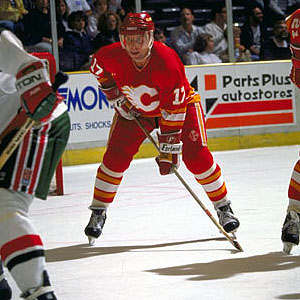
Hrdina playing with Calgary Flames
Alumni during the Heritage Classic.

With his track record of Stanley Cup championships, Hrdina’s success with winning obviously continued throughout his career in the NHL. Hrdina’s finest season came during the Calgary Flames’ championship season of 1988-89. This would be Hrdina’s first full season in the NHL and he registered 22-goals, 32-assists for 54-points in 70-regular season games; a fine performance for a first full season in the league. Though Hrdina was certainly instrumental in bringing the Stanley Cup to Calgary, his contributions are much in the backdrop when considering that Hockey Hall of Fame players Lanny McDonald, Doug Gilmour, Al MacInnis, Joe Mullen and Joe Nieuwendyk were members in the forefront of that championship team, along with all-star players Theoren Fleury, Brad McCrimmon, Gary Roberts, Gary Suter, Mike Vernon, Hakan Loob and Rob Ramage. With so many big names and so much talent on one hockey club, it is not really surprising that Hrdina’s contributions to that championship team were overlooked.

The 1989-90 NHL season would be the one season in which Hrdina did not win a Stanley Cup in his NHL career. Statistically, it would be his second-best season though, notching 12-goals and 30-points in 64-regular season games. While this Calgary Flames team was mostly comprised of the same players and staff from their championship team of the season prior, they would fail to repeat as Stanley Cup Champions, losing in 6-games in the first-round of the playoffs to Wayne Gretzky and the Los Angeles Kings.

The next and final two seasons of Hrdina’s career would bring him two more Stanley Cup championships, though this time with the Pittsburgh Penguins. In December 1990, Hrdina would be traded from Calgary to Pittsburgh for tough-guy defenseman Jim Kyte. Considering Hrdina’s skill and winning experience the deal was rather lopsided in more ways than one. In Pittsburgh Hrdina would find himself on the third or fourth line used mostly in a limited role, for like the Flames, the Penguins were laden with a vast array of talent including one of hockey’s greatest players ever Mario Lemieux, along with an additional mix of Hall-of-Famers, future Hall-of-Famers, and other all-star players like Jaromir Jagr, Kevin Stevens, Tom Barrasso, Ron Francis, Bryan Trottier, Mark Recchi, Paul Coffey, Larry Murphy and former Calgary teammate Joe Mullen.

Jiri Hrdina with the Pittsburgh Penguins –
brought in to tutor fellow countryman and
18-year old Jaromir Jagr.
Again, it is not any real wonder that Hrdina would be forgotten amongst a group of this calibre. However, at least one person would not forget Hrdina’s impact on the team, as fellow Czech and upcoming superstar Jaromir Jagr would greatly benefit from his fellow countryman’s guidance and tutelage during his rookie season in the NHL. At the time, Jagr was only 18-years old, and Hrdina, having lived in and played in North-America for a few seasons longer and being over 10-years Jagr’s senior, would prove to be quite instrumental for adjusting the young Czech superstar to the NHL-brand of hockey, life in North-America and adopting the English language. Hrdina and Jagr would be nicknamed the “Czechmates”and suffice it to say that at least some of Jagr’s outstanding success in hockey both globally and in the NHL can be attributed to Hrdina and the mentoring he provided during their two seasons in Pittsburgh together. The Penguins would go on to defeat the Minnesota North Stars in six-games of the Stanley Cup Finals that first season in Pittsburgh. Hrdina saw limited action in the Finals, only appearing in Game-3, but he played in 14 of Pittsburgh’s 24-playoff games that season, record 2-goals and 2-assists in that stretch. Jagr would play in all 24-playoff games, registering 3-goals and 10-assists.

The 1991-92 season would be Jiri Hrdina’s last in the NHL and would also see the Penguins repeat as Stanley Cup champions, this time defeating the Chicago Blackhawks in four straight games. Hrdina would get his name enscribed on the Stanley Cup for the third and final time. He would also appear in all 21-games of the Penguins playoff run that season, picking up 2-assists along the way. Meanwhile, his “student” Jagr would become the youngest player in NHL history to score a goal in the Stanley Cup Finals at 20-years old, finishing the playoffs with 24-points in the 21-playoff games, and well on his way to super-stardom in the NHL. Hrdina would retire in 1992 after this last championship.

These days Hrdina busies himself as an amateur scout with the Dallas Stars. Though his playing days may be behind him, there are few players more celebrated as a champion than Jiri Hrdina. And while he was greatly “unsung” as a player perhaps mainly due to the fact that he was buried by a long list of some of the greatest players to ever play the game, who happened to be his teammates at the time, attention must be paid to the fact that he became a champion so frequently across such a short period of time. For his achievements and perennial championships, Jiri Hrdina should not be forgotten.